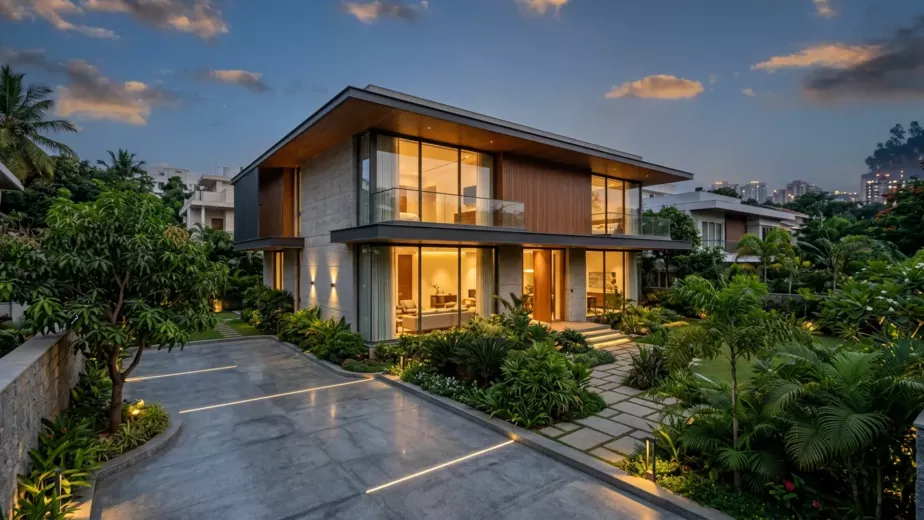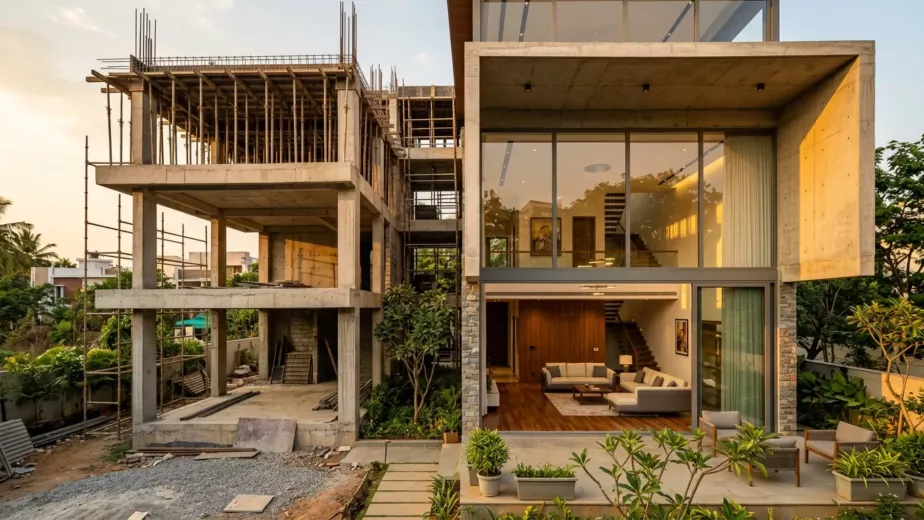
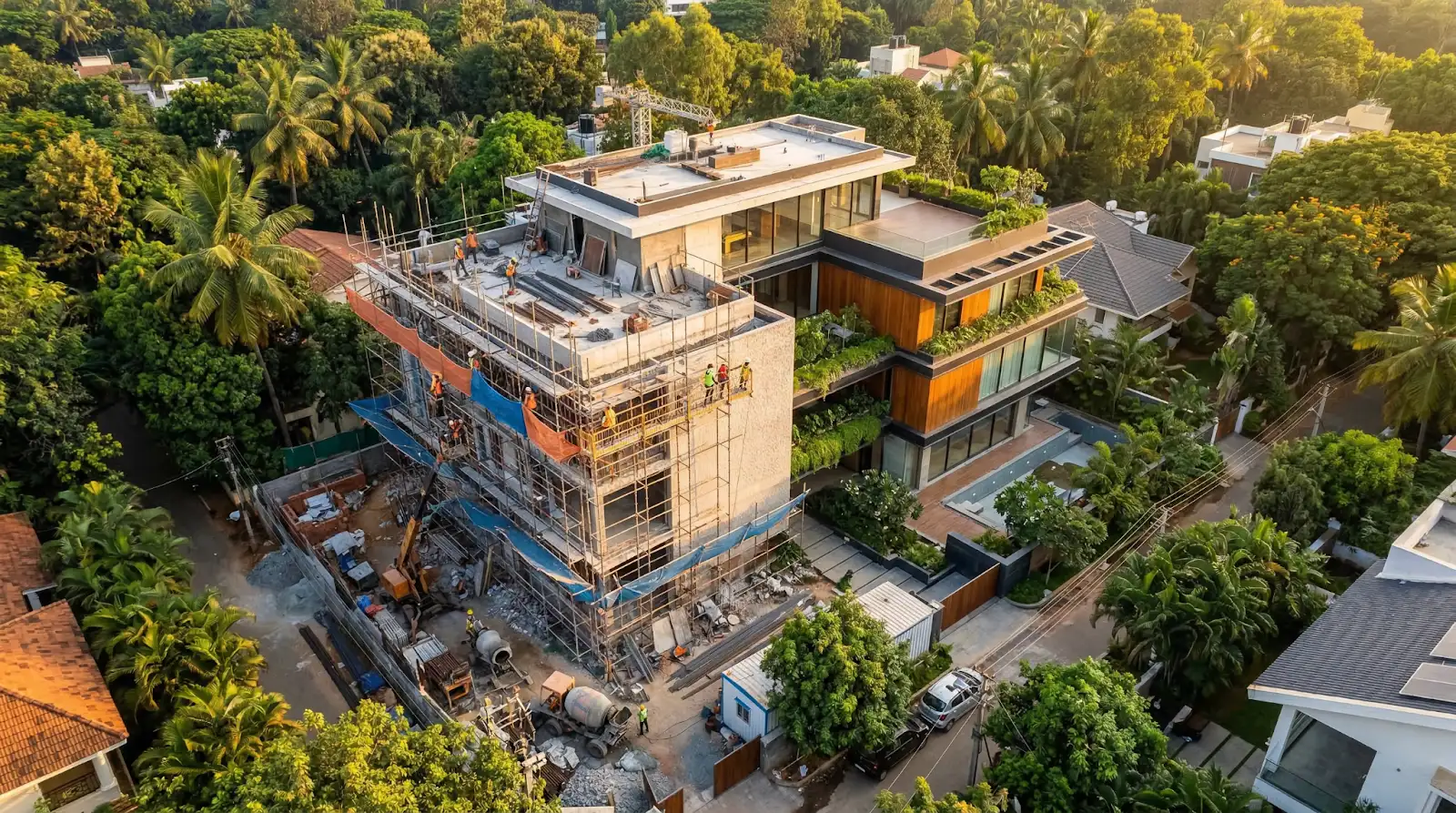
The best construction companies in Bangalore combine licensed structural engineers, RERA compliance, transparent BOQ-based pricing, and dedicated project management under one roof. To choose the right partner, verify credentials on the Karnataka RERA portal (rera.karnataka.gov.in), compare itemized cost estimates rather than per-sq-ft lump sums, and insist on visiting at least two completed projects before signing any agreement. A firm like Line of Thought, which integrates design-build services with real-time project tracking, gives you both creative control and construction accountability from day one.
TL;DR
- Verify before you trust: Check RERA registration, BBMP plan approval history, GST compliance, and structural engineer credentials for any construction company in Bangalore you’re considering.
- Understand the pricing game: BOQ-based pricing protects you far better than vague per-sq-ft quotes. Always demand a line-by-line breakdown.
- Watch for red flags: Quotes 20-30% below market average, no dedicated project manager, refusal to share client references, and vague subcontractor arrangements.
- Ask 15 pointed questions before signing anything: who manages the site daily, how are change orders handled, what is the defect liability period.
- Construction costs in Bangalore for 2026 range from roughly ₹1,700 to ₹3,500+ per sq ft depending on quality, materials, and location.
- Choose integrated design-build firms like Line of Thought that handle architecture, interiors, construction, and post-handover support as one seamless team.
Why Choosing the Right Construction Company in Bangalore Changes Everything
Your home is probably the single biggest financial commitment your family will make. In a city where average construction rates range from ₹1,700 to ₹3,500+ per sq ft for built-up area, even a modest 2,000 sq ft house means you’re putting ₹35 lakh to ₹70 lakh on the line for structure alone.
That number doesn’t account for land, interiors, or approvals.
Here’s the hard truth that most people learn too late: fixing a badly built home costs 2 to 5 times more than building it right the first time. Structural cracks from poor-quality concrete, waterproofing failures from cheap membranes, plumbing leaks hidden behind walls for months, these aren’t hypothetical scenarios. They play out across Bangalore every single month.
The construction partner you choose determines not just how your home looks when it’s handed over, but how it holds up five, ten, twenty years from now. And with India’s residential construction market worth USD 286.38 billion in 2026 and growing at a CAGR of 6.7%, there’s no shortage of companies fighting for your attention. The challenge isn’t finding a builder. It’s finding one you can actually trust.
That’s what this entire guide is built to help you do.
Types of Construction Companies Operating in Bangalore

Not all construction companies in Bangalore work the same way. Before you start comparing quotes, you need to understand the four broad categories and what each brings to the table.
1. General Contractors
These are the most common. You hire an architect separately, get your plans drawn, and then hand the project over to a general contractor who executes the civil and structural work. The contractor manages labor, materials, and day-to-day construction but doesn’t own the design process.
Best for: Homeowners who already have a trusted architect and want to keep design and construction separate.
Risk: Gaps in coordination between architect and contractor can lead to rework, finger-pointing, and delays.
2. Design-Build Firms
A single company handles both design and construction. Your architect and your site engineer work for the same organization. This eliminates the coordination gaps that plague the general contractor model.
Line of Thought operates on this model – combining architecture, interior design, construction, and renovation under one integrated team. When the designer who conceived your living room layout is in the same WhatsApp group as the site engineer pouring your foundation, problems get solved in hours instead of weeks.
Best for: Homeowners who want one point of accountability from concept to handover.
3. Turnkey/EPC Companies
EPC stands for Engineering, Procurement, and Construction. These companies offer everything from soil testing to final finishing at a fixed or semi-fixed price. You sign one contract, agree on specifications, and they deliver a move-in-ready home.
Best for: NRI clients, busy professionals, or anyone who wants minimal involvement in daily decisions.
Risk: Less flexibility for mid-project changes. And “turnkey” doesn’t always mean premium, so scrutinize the material specifications carefully.
4. Specialized Residential Builders
These companies focus solely on homes, often within specific plot sizes or construction types (villas, duplexes, independent houses). Their teams are tailored for residential work, which means fewer mismatches between commercial construction practices and residential quality expectations.
Best for: Homeowners building on standard Bangalore plot sizes (20×30, 30×40, 40×60) who want a company that really understands residential nuances.
| Type | Design Included? | Single Contract? | Flexibility | Best For |
|---|---|---|---|---|
| General Contractor | No | No | High | Owners with architects |
| Design-Build | Yes | Yes | High | Full accountability |
| Turnkey/EPC | Yes | Yes | Low-Medium | Hands-off owners |
| Specialized Residential | Sometimes | Yes | Medium | Standard residential plots |
6 Essential Qualities to Look for in a Construction Company in Bangalore
After watching hundreds of residential projects across Bangalore, we’ve narrowed down the six non-negotiable qualities. Miss even one, and your project is at risk.
1. Licensed Structural Engineers on Staff
A construction company that relies entirely on external engineers has a structural weakness in its own organization (pun fully intended). In-house structural engineers mean faster design iterations, immediate on-site problem-solving, and direct accountability for load calculations, soil-bearing analysis, and RCC design.
Ask specifically: “Who is your structural engineer? Can I see their license?” If they can’t answer that within 30 seconds, that’s a problem.
2. RERA Registration and Regulatory Compliance
The government of India introduced the RERA (Real Estate Regulation and Development) Act in 2016, making real estate purchases safer by bringing uniform guidelines across all Indian states. Any construction company present in Bangalore would have to register with Karnataka RERA.
While RERA registration is more commonly associated with apartment developers selling units, the principle matters for residential construction too. A company that understands and respects regulatory frameworks is one that takes compliance seriously across the board.
3. Transparent Contracts with Detailed BOQ
Your contract should spell out every single material, brand, specification, and quantity. A Bill of Quantities (BOQ) isn’t just a nice-to-have; it’s your only real protection against cost escalation and material downgrading mid-project.
If a company can’t produce a line-by-line BOQ before signing, they’re either disorganized or deliberately opaque. Neither is acceptable when you’re investing ₹40-80 lakh.
4. In-House Project Management
A dedicated project manager (PM) assigned to your site is the difference between organized progress and daily chaos. Your PM should coordinate subcontractors, manage material procurement schedules, run quality checklists at every milestone, and give you weekly updates you can actually understand.
“Who will be my single point of contact on site?” should be one of your first questions. If the answer is vague, walk away.
5. Quality Material Sourcing with Brand Specifications
Every reputable construction company in Bangalore should specify brands in writing. Not “premium cement” but “UltraTech OPC 53 Grade.” Not “good tiles” but “Kajaria 2×2 vitrified, up to ₹70/sq ft.”
Materials account for 50-60% of costs. When a company won’t commit to brands, they’re keeping the door open to downgrade without your knowledge.
6. Post-Handover Support and Defect Liability
Construction doesn’t end at key handover. Settling cracks, minor plumbing adjustments, electrical tweaks, these are normal in the first 6-12 months. Builders must fix any structural issues for five years, ensuring a quality home.
A trustworthy company builds the defect liability period into the contract, typically 12 months for general issues and 5 years for structural defects.
How to Verify a Construction Company’s Credentials in Bangalore
Talk is cheap. Here’s how to actually verify that a construction company in Bangalore is who they say they are.
Step 1: RERA Registration Check
Visit https://rera.karnataka.gov.in/ on your phone or computer. Click on ‘Services’, then choose ‘Project Status’ from the list. Search for the Project.
You can search by project name, promoter name, or RERA registration number. The results will show RERA Registration Number, Project Approval Date, Expected Completion Date, and Litigation Status (if any).
Step 2: BBMP/BDA Approval History
The BBMP has the right and responsibility to grant building permit letters to contractors. If a building is built in Bangalore without receiving the required approval from the BBMP, the authority has the jurisdiction to demolish the building or impose a one-time fine.
Ask the company for copies of BBMP-approved building plans from at least 2-3 recent projects. If they’ve been operating in Bangalore for years, this should be easy to produce.
Step 3: GST Registration Verification
Contractors need to provide documents like solvency certificates, work completion certificates, GST registration, and residential proof. You can verify any company’s GST number on the government portal at gst.gov.in.
Step 4: Structural Engineer License
BBMP maintains a registration list of approved professionals. BBMP registers Architects, Engineers, Structural Engineers, and Supervisors through its professional registration system. Ask for license numbers and cross-check them.
Step 5: PF and ESI Compliance
This is the one most homeowners skip, and it matters more than you think. If a company doesn’t pay Provident Fund (PF) and Employee State Insurance (ESI) for its workers, it tells you two things: they cut corners on compliance, and their workforce is likely unstable.
Credential Verification Checklist
| Credential | Where to Verify | Red Flag if Missing |
|---|---|---|
| RERA Registration | rera.karnataka.gov.in | Major |
| BBMP Approvals | bpas.bbmpgov.in | Major |
| GST Registration | gst.gov.in | Critical |
| Structural Engineer License | BBMP professional register | Major |
| PF/ESI Compliance | Ask for certificates | Moderate |
| Trade License | BBMP trade license portal | Moderate |
Red Flags: Construction Companies to Avoid in Bangalore
Some warning signs are so consistent across bad experiences that they’ve become almost predictable. If you spot even two of these, reconsider.
1. Suspiciously Low Quotes
Average construction rates in Bangalore range from ₹1,700 to ₹3,500+ per sq ft depending on quality. If someone quotes you ₹1,200 per sq ft for “premium” construction, they’re either using substandard materials, underpaying labor, or planning to escalate costs mid-project through change orders.
A quote 20-30% below the market average almost always hides something.
2. Vague or Missing BOQ
“We’ll use good quality materials” is not a specification. If the BOQ doesn’t name brands, quantities, grades, and unit rates, you have no contractual basis to challenge substitutions later.
3. No Dedicated Project Manager
When you ask “who manages my site daily?” and the answer is “our supervisor checks in” or “the mason handles things,” you’re looking at a company that runs projects on autopilot. This is how quality slips, timelines stretch, and budgets balloon.
4. Refusal to Share Client References
Every good company has happy clients. If a company won’t let you speak to even 2-3 previous homeowners, or won’t let you visit a completed project, they’re hiding something.
5. Unclear Subcontractor Management
Most construction companies in Bangalore rely on subcontractors for plumbing, electrical, waterproofing, and sometimes even masonry. That’s not unusual. But if the company can’t tell you which subcontractors they use, how they vet them, or who holds quality accountability, you’ll end up managing five different teams yourself.
6. Cash-Only Payment Demands
This one should be obvious, but it still catches people off guard. Companies that insist on large cash payments are typically trying to evade taxes. Beyond the legal implications, this strips you of any financial trail if disputes arise later.
7. No Written Timeline
A construction company that won’t commit to milestones in writing has no intention of meeting them. Your agreement should include stage-wise timelines: excavation, foundation, slab, brickwork, plastering, finishing, handover. With dates, not just durations.
Questions to Ask a Construction Company Before Signing
Here are 15 questions that separate serious due diligence from casual vetting. Ask all of them. Take notes. Compare responses across companies.
Project Management & Execution
1. Who will be my dedicated project manager, and how many projects are they handling simultaneously?
2. What is your daily site supervision structure? Is there a full-time site engineer?
3. How do you handle monsoon construction? What precautions do you take for curing, waterproofing, and schedule recovery?
Materials & Quality
4. Can you share the complete material specification sheet, including brand names, grades, and quantities?
5. What is your quality control process at each construction stage? Who signs off?
6. Do you conduct third-party soil testing before foundation design?
Cost & Payment
7. Is your quote based on BOQ, per-sq-ft, or lump sum? Can you walk me through the detailed line items?
8. What is the payment schedule, and is it linked to construction milestones?
9. How do you handle cost escalation for materials like steel and cement? Is there a cap?
Timeline & Communication
10. What is the estimated construction timeline for my project? Can I see a Gantt chart or milestone schedule?
11. How will I receive progress updates? Weekly reports? Photos? WhatsApp groups?
12. What happens if you miss a milestone? Is there a penalty clause?
Legal & Compliance
13. Are you RERA registered? Can I see your registration documents?
14. Do you carry contractor’s all-risk insurance? What about worker compensation insurance?
15. What is the defect liability period, and what does it cover?
Understanding Construction Contracts: What Every Agreement Must Include
Your construction contract is the single most important document in your building journey. If it’s poorly drafted, vague, or full of holes, you’re going to pay for it, literally.
Here are the eight elements every construction agreement in Bangalore must contain:
1. Scope of Work
Define exactly what’s included and what’s not. Does the contract cover the compound wall? Borewell? BESCOM connection? Exterior landscaping? Lift shaft preparation? If it’s not written down, it’s not included.
2. Material Specifications
Every material, from the cement grade to the tile brand to the wire gauge, should be listed with name, specification, and quantity. This is your BOQ, and it’s non-negotiable.
3. Payment Milestones
Payments should be tied to construction stages, not calendar dates. A typical structure: – 10% on agreement signing – 15% on foundation completion – 15% on ground floor slab – 15% on first floor slab – 15% on brickwork and plastering – 15% on electrical, plumbing, and finishing – 10% on final inspection and handover – 5% retained for defect liability period
4. Project Timeline with Milestones
The time duration required for building a new house in Bangalore: Ground Floor: 3 to 4 months, G+1 Floor: 5 to 7 months, G+2 Floors: 7 to 9 months, G+3 Floors: 9 to 12 months.
Your contract should specify start date, milestone dates, and completion date. With a buffer of 15-20% built in for weather and supply delays.
5. Delay Penalty Clause (Liquidated Damages)
If the contractor misses the agreed completion date without valid cause, there should be a financial consequence. Typically, this is 0.5% to 1% of the contract value per week of delay, capped at 5-10% total.
6. Change Order Process
Changes will happen. Your contract should define how changes are requested, priced, approved, and documented. Without a written change order process, every alteration becomes a dispute.
7. Warranty and Defect Liability
Standard practice: 12 months for general defects (plumbing leaks, paint issues, tile damage) and up to 5 years for structural defects (foundation settling, slab cracks, column issues).
8. Dispute Resolution
If things go wrong, how are disputes resolved? Arbitration is faster and cheaper than civil court. Your contract should specify the dispute resolution mechanism and jurisdiction.
Construction CompanyPricing Models: Per Sq Ft vs Lump Sum vs BOQ-Based

This section alone can save you lakhs. Three pricing models dominate Bangalore’s residential construction market, and each one carries very different levels of risk for you.
Per Sq Ft Model
How it works: The company quotes a flat rate per square foot of built-up area. Example: ₹2,200/sq ft x 2,000 sq ft = ₹44 lakh.
The appeal: Simple. Easy to compare across companies. Quick to understand.
The trap: “Per sq ft” is meaningless without a specification sheet. Company A at ₹1,800/sq ft using basic cement and no-name tiles is not the same as Company B at ₹2,400/sq ft using UltraTech cement and Kajaria vitrified tiles. Central areas like Koramangala and Indiranagar can cost 15-25% higher than suburbs like Whitefield outskirts and Electronic City.
Client protection level: Low. Too much room for ambiguity.
Lump Sum Model
How it works: The company quotes a total project cost for the entire scope. Example: ₹52 lakh for a complete 2-BHK duplex.
The appeal: Budget certainty. You know the total before you start.
The trap: The company carries the material cost risk, which means they’ll price in a safety margin. You also lose visibility into where your money goes, making it harder to spot overcharges or material downgrades.
Client protection level: Medium. Good for budget certainty, poor for transparency.
BOQ-Based Model
How it works: Every item is listed with its quantity, unit rate, and total cost. Steel: 3.5 MT x ₹65,000/MT = ₹2,27,500. Cement: 180 bags x ₹380/bag = ₹68,400. And so on for 200-400 line items.
The appeal: Full transparency. You can compare line by line across companies. You can verify material costs against market rates. You can spot inflated quantities.
The trap: It requires more effort to read and understand. Some homeowners find it overwhelming and default back to per-sq-ft comparisons. Don’t.
Client protection level: High. This is what you should insist on.
At Line of Thought, we use transparent BOQ-based pricing as standard practice. Our clients see every rupee, every material, every quantity. Because we believe that if you’re spending ₹40-80 lakh on your home, you deserve to know exactly what you’re paying for.
| Pricing Model | Transparency | Budget Certainty | Client Protection | Best For |
|---|---|---|---|---|
| Per Sq Ft | Low | Low | Low | Initial comparisons only |
| Lump Sum | Medium | High | Medium | Hands-off clients |
| BOQ-Based | High | Medium-High | High | Informed homeowners |
The Role of Technology in Modern Construction Management
This is something most competitor blogs don’t talk about, and it’s becoming a real differentiator between professional construction companies in Bangalore and the old-school operators.
Real-Time Project Tracking
The days of visiting your construction site every evening and hoping the work matches the plan are over. Leading companies now use WhatsApp-based photo updates, cloud dashboards, and app-based trackers that let you see progress from anywhere.
At Line of Thought, our project tracking system sends you daily photo updates and weekly milestone reports. Whether you’re in Bangalore, Mumbai, or overseas, you know exactly what happened on your site today.
3D Visualization Before Construction Begins
Walking through your home in a 3D render before a single brick is laid helps catch design issues early. Column positions that block sightlines, bathroom door swings that clash with fixtures, kitchen layouts that don’t work with your cooking style, all of these get resolved on screen instead of on site.
Digital BOQ and Cost Tracking
When your BOQ is digital, every material purchase is logged against the budget. You can track real-time spending, flag overruns early, and approve material changes before they happen.
Understanding Bangalore’s Approval Process: What Your Builder Should Handle
If you want to build something in Bangalore, you must obtain permission from Bruhat Bangalore Mahanagara Palike (BBMP). The approval process is complex, and a good construction company should handle most of it for you.
Key Approvals Required
- BBMP/BDA Building Plan Sanction: Required before excavation. Essential BBMP plan approval fees for house construction in Bangalore: ₹1-3 lakhs based on guidance value, scrutiny, and development charges.
- BESCOM Electrical Connection: For temporary construction power and permanent home connection. NOCs from BESCOM, BWSSB add costs.
- BWSSB Water Connection: Required for municipal water supply.
- Soil Testing Report: Required for foundation design.
- Commencement Certificate: Issued by BBMP before construction starts.
- Occupancy Certificate (OC): Issued after construction, confirming the building complies with approved plans.
A construction company that says “we don’t handle approvals” is offloading a massive burden onto you. The best firms, including Line of Thought, manage the entire approval lifecycle as part of their service scope.
Why Line of Thought Stands Out Among Construction Companies in Bangalore

We built Line of Thought on a simple belief: homeowners shouldn’t have to choose between great design and great construction. Most companies are good at one. Very few deliver both.
20+ Years of Integrated Expertise
Our team has spent over two decades delivering high-end residential projects across Bangalore. From villa construction in Whitefield to apartment renovation in Koramangala, from full-scale independent homes in HSR Layout to premium interiors in Jayanagar, we’ve seen every site condition, every material challenge, and every regulatory curveball Bangalore can throw.
Design-Build Integration
As both a construction company in Bangalore and a leading interior designer in Bangalore, we eliminate the gap between what gets designed and what gets built. Your architect and your site engineer sit in the same room. Your material selections for interiors are coordinated with your structural specifications from day one.
Transparent BOQ Pricing
Every project begins with a detailed, line-by-line BOQ. No hidden costs. No vague allowances. You see the brand, grade, quantity, and unit rate for every item before you sign.
Project Tracking
Daily photo updates. Weekly milestone summaries. Monthly progress reviews. You’re never left guessing about what’s happening on your site.
Material Quality Charter
We maintain a pre-approved material charter that specifies minimum quality standards for every category: cement, steel, aggregates, plumbing fittings, electrical wiring, waterproofing membranes, tiles, paint. Substitutions below charter standards are not permitted without written client approval.
Post-Handover Support
Our relationship doesn’t end at key handover. A 12-month general defect liability and 5-year structural warranty means we stand behind our work. Because we plan to build your next project too.
Villa Builder in Bangalore
For clients looking at independent villa construction in Bangalore, our team brings specialized expertise in foundation engineering for Bangalore’s varied soil conditions, duplex and triplex structural design, and landscape integration that makes your villa feel like it belongs on its site.
Renovation Expertise
As a trusted name in renovation in Bangalore, Line of Thought also handles complete home makeovers, structural repairs, bathroom and kitchen remodeling, and space optimization for aging properties. Whether your home was built five years ago or fifty, we have the skills to make it feel new.
Areas We Serve: Construction Projects Across Bangalore
Line of Thought delivers residential construction, villa building, interior design, and renovation services across all major Bangalore neighborhoods:
- East Bangalore: Whitefield, Marathahalli, Varthur, Sarjapur Road, Bellandur
- South Bangalore: Koramangala, HSR Layout, Jayanagar, JP Nagar, Bannerghatta Road, Kanakapura Road
- North Bangalore: Hebbal, Yelahanka, Devanahalli, Thanisandra, Hennur
- West Bangalore: Rajajinagar, Vijayanagar, Nagarbhavi
- Central Bangalore: Basavanagudi, Sadashivanagar, Malleswaram
The city’s thriving IT and startup ecosystem continues to fuel demand for mid-premium and luxury housing, especially in Whitefield, Sarjapur Road, and Koramangala. North Bangalore continues to draw attention, with areas like Devanahalli, Bagalur, and Nelamangala seeing rising demand, driven by their proximity to the airport and employment hubs.
Whether your plot is on a 20×30 site in Jayanagar or a sprawling 60×80 parcel in Devanahalli, we’ll bring the same level of craft, accountability, and care.
Common Mistakes Homeowners Make When Hiring Construction Companies in Bangalore
Let’s be honest about the errors we see homeowners repeat, sometimes despite our own advice.
1. Choosing the Cheapest Quote
The lowest bid almost always leads to the most expensive project. When a company quotes 20-30% below market, they’ll recover that margin through change orders, material downgrades, or phantom “extra work” charges.
2. Skipping the Site Visit to Completed Projects
Photos and testimonials are easy to fake. There’s no substitute for standing inside a home that a company built, running your hand along the walls, checking the door alignments, flushing the toilets, switching on every light. Do this for at least two completed projects before shortlisting.
3. Ignoring the Contract Details
Signing a contract without reading every clause is like handing someone a blank cheque. We’ve seen homeowners discover mid-project that their contract didn’t cover compound walls, borewell, or even external plastering.
4. Not Having a Contingency Budget
Material prices move with demand and fuel costs, so keep a 5-8% contingency in your budget. Summer labour cost rises by 5-8%. If your budget has zero buffer, every small change becomes a crisis.
5. Managing Subcontractors Yourself
Unless you have a construction background, you should not be coordinating between the mason, electrician, plumber, and painter. That’s your project manager’s job. If the company doesn’t provide one, hire one independently. The cost of a good PM (₹30,000-50,000/month) is negligible compared to the rework cost from poor coordination.
6. Starting Construction Before Approvals
Approvals, building plan sanctions, and NOCs can take 3-6 months depending on your city. Starting construction without them risks stop-work notices. We’ve seen projects halted for months because homeowners were impatient and contractors were compliant.
FAQs: Construction Companies in Bangalore
1. What is the average construction cost per sq ft in Bangalore in 2026?
As of early 2026, average construction rates in Bangalore range from ₹1,700 to ₹3,500+ per sq ft for built-up area, excluding land, approvals, and high-end interiors. For standard residential builds, expect ₹2,200-2,800 per sq ft. Premium villa construction with top-tier finishes can cross ₹3,500/sq ft.
2. How long does it take to build a home in Bangalore?
The time duration for building a new house in Bangalore: Ground Floor: 3 to 4 months, G+1 Floor: 5 to 7 months, G+2 Floors: 7 to 9 months, G+3 Floors: 9 to 12 months, G+4 Floors: 12 to 14 months. Add 2-4 months if construction overlaps the monsoon season, and 3-6 months for pre-construction approvals and design.
3. Do construction companies in Bangalore handle government approvals?
Good ones do. BBMP plan sanction, BESCOM power connection, BWSSB water supply, and commencement certificates should all be part of the service scope. At Line of Thought, we handle the full approval lifecycle so you don’t have to navigate government offices yourself.
4. What is the difference between BOQ-based and per-sq-ft pricing?
Per-sq-ft pricing gives you a single rate multiplied by your built-up area. It’s simple but opaque. BOQ-based pricing lists every material, quantity, and unit rate as separate line items (typically 200-400 items). BOQ gives you far greater transparency and protection against hidden costs.
5. How do I verify if a construction company in Bangalore is RERA registered?
Visit https://rera.karnataka.gov.in/ on your phone or computer. Click on ‘Services’, then choose ‘Project Status’. You can search by company name, project name, or registration number.
6. What is the best time to start construction in Bangalore?
October to March is generally ideal across most regions. The weather is dry, labor availability is steady, and transport of materials is easier compared to monsoon or peak summer. Starting in October gives you 5-6 months of uninterrupted work before the monsoon.
7. Should I hire a separate architect or choose a design-build company?
Both approaches work, but a design-build company eliminates the coordination gap between design and execution. If your architect and contractor work for the same firm, design changes translate to site changes faster, with fewer communication breakdowns. This is the model Line of Thought follows.
8. What insurance should a construction company carry?
At minimum: Contractor’s All Risk (CAR) insurance, third-party liability insurance, and workmen’s compensation insurance. These protect you from financial liability if workers are injured on site or if the structure is damaged during construction.
9. What are the hidden costs in home construction in Bangalore?
The most commonly missed costs: BBMP plan approval fees (₹1-3 lakhs), NOCs from BESCOM and BWSSB, soil testing (₹8,000-15,000), borewell (₹1-3 lakhs depending on depth), compound wall, external development, temporary power connection, and debris removal.
10. Can Line of Thought handle both interior design and construction for my home?
Yes. Line of Thought is an integrated design-build firm offering construction, villa construction, interior design, and renovation services in Bangalore. A single team manages your project from architectural concept through interior finishing to final handover, which means zero coordination gaps and complete accountability.
Key Takeaways
- Your construction partner decision is your most consequential financial choice. The wrong company costs 2-5x more to fix than doing it right the first time.
- Verify everything independently. Check RERA registration at rera.karnataka.gov.in, GST at gst.gov.in, and BBMP professional registrations. Don’t take any company’s word for their own credentials.
- Demand BOQ-based pricing. Per-sq-ft quotes are useful for rough comparisons but dangerous as contractual commitments. A detailed BOQ is the only pricing model that truly protects homeowners.
- Construction costs in Bangalore for 2026 range from ₹1,700 to ₹3,500+ per sq ft depending on quality, location, and design complexity. Budget a 5-10% contingency above your quoted amount.
- Red flags are consistent: unusually low quotes, no dedicated PM, vague material specs, refusal to share references, and cash-only payment demands.
- Ask all 15 questions before signing. A company that answers them confidently, with specifics, is one that operates professionally.
- Your contract is your shield. It must include scope of work, material specs, milestone-based payments, delay penalties, warranty terms, and dispute resolution.
- Integrated design-build firms like Line of Thought eliminate the architect-contractor coordination gap that causes most residential project failures.
- Technology matters. Real-time project tracking, digital BOQs, and 3D visualization are no longer luxury features; they’re markers of a modern, accountable construction company.
- Don’t start construction before approvals are in hand. BBMP plan sanction, BESCOM, BWSSB, and commencement certificate first. Then dig.
Ready to build your home with a team that combines design, construction, and complete transparency? Contact Line of Thought for a consultation and see why Bangalore homeowners trust us with their most important investment.