
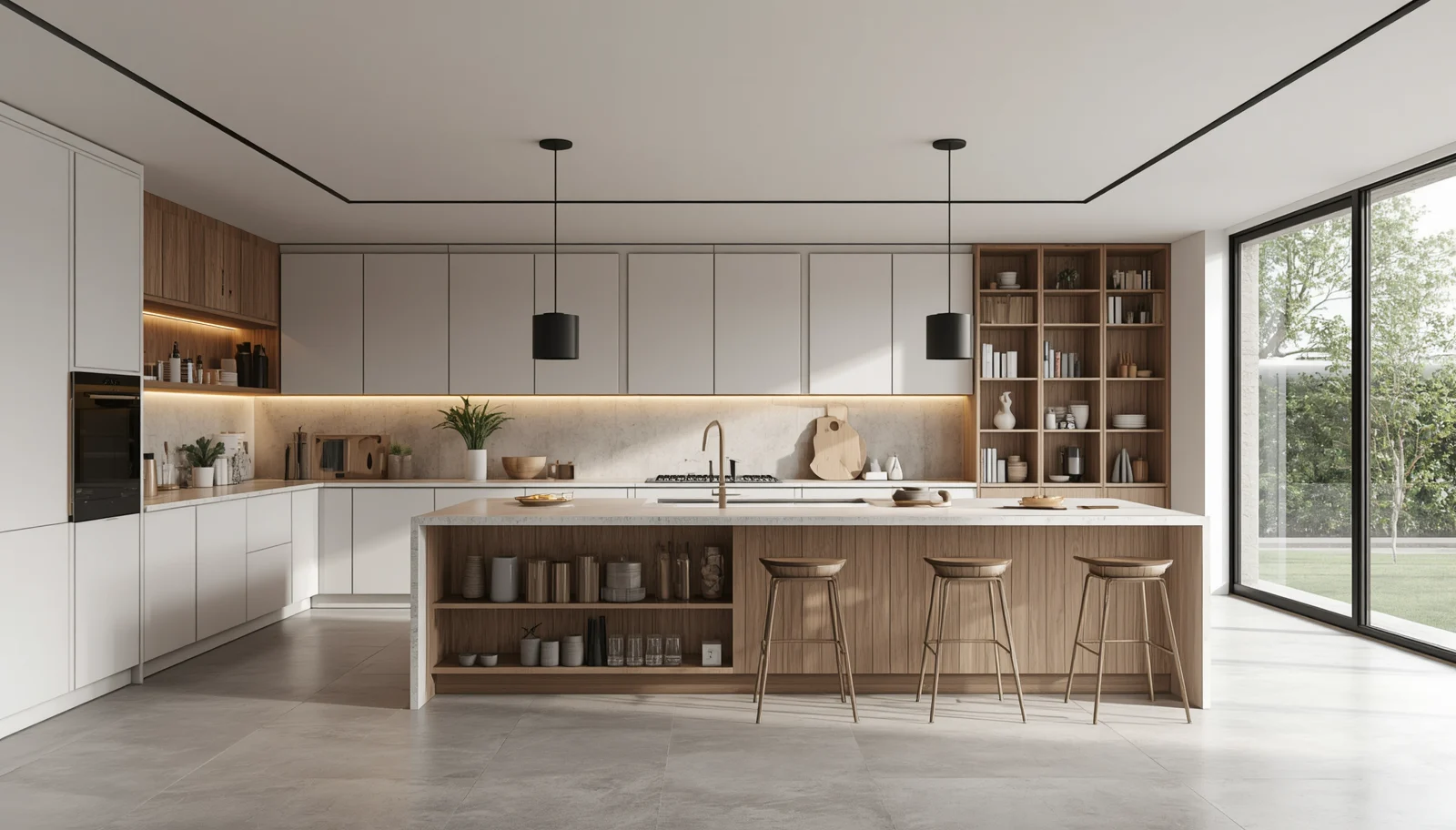
Introduction
The kitchen has evolved into more than just a place for cooking—it’s now the central hub of the home where families gather for meals, and precious memories are made. As homeowners look for spaces that are both stylish and practical, modular kitchen designs have become a popular choice in modern interior design style.
Whether you’re renovating an existing home or designing a new one, this guide provides all the essential information you need to plan a modular kitchen.
It covers layout options, material choices, storage solutions, pricing details for various modular kitchen designs, maintenance advice, and common mistakes to avoid. This ensures you can create a kitchen that fits your lifestyle perfectly.
What is a Modular Kitchen?
A modular kitchen is a contemporary kitchen design that uses prefabricated cabinets, drawers, and storage units, all customized to suit your available space.
Unlike traditional kitchens, modular kitchens are precision-engineered for quicker installation, better use of space, and a more polished look. They offer flexibility in layouts, smart storage options, and a variety of materials, colours, and finishes. This combination of functionality and modern design makes them an excellent choice for any home.
Benefits of Modular Kitchen Design
A modular kitchen is designed to make daily cooking easier, more organized, and more efficient. With smart storage and contemporary finishes, it brings together practicality and style, making it an ideal choice for any home.
Better Space Utilization
Every cabinet, drawer, and corner in a modular kitchen is designed to maximize storage space. Features like pull-out units, corner organizers, and overhead cabinets ensure that no space is wasted. This makes modular kitchens suitable for both large homes and smaller spaces.
Customisable Design
Modular kitchens can be tailored to match your lifestyle, cooking habits, and storage needs. You have the freedom to choose the layout, materials, colours, finishes, and accessories that best complement your home.
Faster Installation
One major benefit is the quicker installation and better finish. Since these units are made in a factory, they are more precise, require less work on-site, and can be completed faster, making them a great option for apartment renovations and new interior designs.
Better Organisation
Dedicated storage for all your kitchen essentials—cookware, groceries, utensils, and appliances—keeps everything in order and within easy reach. A clutter-free environment makes the cooking process more enjoyable.
Easy Maintenance
Modular kitchens are built with materials that are durable and moisture-resistant, making them easy to clean and maintain. Individual cabinets or accessories can be replaced or repaired without affecting the rest of the kitchen.
Modern Look
With their sleek finishes, hidden storage, and clean lines, new modular kitchen designs offer a stylish and timeless appearance that complements both modern and traditional home interiors.
Adds Property Value
A well-designed modular kitchen not only enhances your daily living experience but can also increase the resale value of your home, making it a great long-term investment.
Types of Modular Kitchen Layouts
Choosing the right modular kitchen layout is crucial for creating a functional and efficient cooking space. The ideal layout depends on your kitchen size, storage needs, and cooking style.
Here are the most popular modular kitchen designs in 2026.
L-Shaped Modular Kitchen
An L-shaped kitchen uses two adjacent walls to form an efficient work triangle, while keeping the space open and uncluttered. It is one of the most popular layouts for apartments and small homes.
Best for: 1BHK & 2BHK apartments, small to medium-sized kitchens.
U-Shaped Modular Kitchen
A U-shaped kitchen features cabinets on three sides, offering maximum storage and countertop space. It is perfect for families who frequently cook and need dedicated work zones.
Best for: Large apartments, villas, and spacious kitchens.
Parallel Modular Kitchen
Also known as a galley kitchen, this layout has two parallel counters that optimize storage and workflow. It is ideal for small or narrow spaces.
Best for: Compact apartments and narrow kitchens.
Straight Modular Kitchen
A straight kitchen has all the cabinets and appliances lined up along one wall, creating a clean and space-efficient design.
Best for: Studio apartments and small homes.
Island Modular Kitchen
An island kitchen includes a central countertop that serves as extra workspace, storage, and seating, adding a premium look to the kitchen.
Best for: Large homes, villas, and open-plan layouts.
Peninsula Modular Kitchen
A peninsula kitchen features a countertop extension that acts as a breakfast bar or additional workspace, without requiring the space of a full island.
Best for: Medium-sized kitchens and open layouts.
How to Choose the Right Modular Kitchen
Selecting the right modular kitchen involves more than just looking good. A kitchen that fits your lifestyle will remain functional and efficient for years.
Consider Your Kitchen Size
The available space largely determines which layout will work best. For compact apartments, straight or parallel kitchens are ideal, whereas larger homes can comfortably use U-shaped or island kitchens.
Understand Your Cooking Habits
If you cook often, you’ll benefit from larger countertops, dedicated preparation areas, and ample storage. For households that cook less frequently, aesthetics and compact layouts may be more important.
Plan Storage Carefully
Before finalizing your design, consider all your storage needs.
Items like pantry essentials, cookware, appliances, crockery, and cleaning supplies all need their own designated spaces. Including tall units, corner storage, and pull-out organizers during the planning stage prevents clutter and improves organization.
Set a Realistic Budget
Your budget will influence the materials, finishes, hardware, and accessories you can afford. Investing in durable cabinets and quality hardware often provides better long-term value than focusing solely on decorative finishes.
Think About Future Needs
A modular kitchen is a long-term investment. Planning for future storage requirements, growing families, and new appliances helps ensure the design remains practical and efficient for years.
Modular Kitchen Materials
The durability and appearance of your kitchen largely depend on the materials you choose.
Selecting high-quality materials ensures that your kitchen can handle daily use while maintaining its appearance for years.
Cabinet Materials
Cabinets are a key component of every modular kitchen.
Common options include:
- Plywood: Strong, moisture-resistant, and ideal for long-term use.
- HDHMR Boards: Highly moisture-resistant and increasingly popular in premium kitchens.
- MDF: Smooth and affordable, suitable for dry areas.
- Particle Board: Cost-effective but less durable for heavy use.
For homes in Bangalore, moisture-resistant plywood and HDHMR boards are often preferred due to their durability.
Countertop Materials
Countertops should be durable, heat-resistant, and easy to maintain.
Popular options include:
- Granite
- Quartz
- Marble
- Solid Surface
Quartz has become one of the most sought-after choices due to its low maintenance and elegant look, while granite remains a practical and durable option for Indian kitchens.
Cabinet Finishes
The finish plays a big role in the overall look of your kitchen.
Popular options include:
- Laminate
- Acrylic
- PU Finish
- Veneer
- Glass
Laminate is a practical choice due to its affordability and durability, while acrylic and PU finishes offer a premium, high-gloss appearance.
Modular Kitchen Storage Solutions
No matter how stylish your kitchen looks, poor storage can make it feel cluttered and inefficient. A well-planned modular kitchen ensures that every inch of available space is used effectively.
Modern storage accessories help organize cookware, groceries, utensils, and appliances while improving accessibility.
Tall Pantry Units
Tall pantry cabinets provide dedicated storage for groceries, dry ingredients, and small appliances, using vertical space efficiently and reducing clutter on countertops.
They are suitable for both small apartments and large homes.
Pull-Out Pantry and Tandem Drawers
Instead of deep shelves where items can get lost, pull-out pantry units and tandem drawers allow easy access to everything stored inside.
They are ideal for storing utensils, cookware, containers, and pantry essentials while improving workflow.
Corner Storage Solutions
Kitchen corners often go unused in traditional kitchen designs.
Accessories like magic corners, carousel units, and corner pull-outs turn these areas into practical storage for heavy utensils and cookware.
Under-Sink Storage
The space under the sink can be used efficiently with dedicated organizers for cleaning supplies, waste bins, and detergents.
Moisture-resistant cabinets enhance durability in this area.
Overhead Cabinets
Ceiling-high overhead cabinets maximize storage while maintaining a clean and seamless look.
They are perfect for storing seasonal cookware and items that are not used frequently.
Drawer Organisers
Dedicated organizers for cutlery, spices, bottles, and cooking accessories keep everything neatly arranged and easily accessible, reducing countertop clutter and improving efficiency.
Modular Kitchen Colour Combinations
Choosing the right colour scheme can make your kitchen look brighter, more open, and more attractive.
Here are some popular options for modern modular kitchens:
- White & Wood: A classic pair that brings a bright, warm, and sophisticated feel to your kitchen.
- Grey & White: A sleek and contemporary choice that feels modern and elegant.
- Beige & Earthy Tones: Soft, neutral hues that offer a calming and welcoming ambiance.
- Deep Blue & White: A stylish mix that adds character while maintaining a balanced, sophisticated look.
- Matte Black & Wood: A bold and luxurious option that gives your kitchen a modern and striking appearance.
Modular Kitchen Lighting
Good lighting is essential for both the look and function of your kitchen.
Combining different types of lighting helps create a bright, comfortable, and practical cooking space.
- Ambient Lighting: Ceiling LED lights provide general illumination across the entire kitchen.
- Task Lighting: Under-cabinet LEDs offer focused lighting on countertops, making food prep easier and safer.
- Accent Lighting: Highlights glass cabinets, open shelves, or display areas, adding depth and style.
- Decorative Lighting: Pendant lights above islands or breakfast bars can serve as a stylish focal point.
Using these lighting layers together makes your modular kitchen more practical, welcoming, and visually appealing.
Modular Kitchen Designs with Price (2026)
One of the most common questions homeowners have is, “What is the cost of a modular kitchen?”
The price depends on several factors, including the size, layout, materials, finishes, hardware, and accessories used.
While no two kitchens are the same, these price ranges reflect typical costs in the Bangalore market for 2026.
| Kitchen Type | Estimated Price |
|---|---|
| Basic Modular Kitchen | ₹1.5 lakh – ₹3 lakh |
| Mid Range Modular Kitchen | ₹3 lakh – ₹6 lakh |
| Premium Modular Kitchen | ₹6 lakh – ₹10 lakh |
| Luxury Modular Kitchen | ₹10 lakh+ |
Want a quick estimate for your kitchen? Use our Modular Kitchen Cost Calculator to get an estimate based on your kitchen requirements.
Factors Affecting Modular Kitchen Cost
The cost of a modular kitchen is influenced by:
- Size and layout of the kitchen
- Type of cabinet material
- Countertop selection
- Finish options (Laminate, Acrylic, PU, Veneer)
- Quality of hardware
- Storage accessories
- Built-in appliances
- Lighting and electrical work
Instead of focusing just on cost, homeowners should consider the overall value of superior materials, durable hardware, and a well-thought-out design.
Common Mistakes to Avoid
Avoid these common errors to create a modular kitchen that is both functional and long-lasting:
- Prioritizing appearance over usability: Choose a layout that supports your cooking routine before deciding on colours and finishes.
- Neglecting the work triangle: Position the sink, stove, and refrigerator so they are easily accessible and allow smooth movement for efficient cooking.
- Underestimating storage needs: Include pantry units, tall cabinets, and drawer organizers to meet current and future storage requirements.
- Using low-quality hardware: Invest in reliable hinges, drawer guides, and fittings for better performance and longer life.
- Poor lighting design: Combine ambient, task, and accent lighting to improve visibility and the kitchen’s appearance.
- Ignoring ventilation: Install a proper chimney and ensure good airflow to prevent smoke, grease, and moisture buildup.
Maintenance Tips for Your Modular Kitchen
A well-designed modular kitchen is built to last, but routine maintenance is essential to keep it looking good and working well.
Simple care habits can help preserve the condition of cabinets, countertops, hardware, and appliances, and reduce the need for costly repairs over time.
Clean Surfaces Regularly
Wipe countertops, cabinet doors, and handles daily with a soft cloth and mild cleaning solution. Avoid harsh chemicals or abrasive scrubbers, which can damage surfaces like laminates, acrylics, and coatings.
Prevent Moisture Damage
Although modern kitchens use moisture-resistant materials, water can still affect cabinet life. Clean up spills immediately and keep areas near the sink dry.
Maintain Hardware
Check soft-close hinges, drawer slides, and lifting mechanisms regularly. Tighten any loose screws and lubricate moving parts when needed to ensure smooth operation.
Protect Countertops
Use chopping boards for cutting and trivets for hot cookware to avoid scratches, stains, and heat damage. Proper care helps keep granite, quartz, and solid-surface countertops looking new for years.
Keep the Kitchen Well Ventilated
An effective chimney and good airflow help reduce grease, moisture, and cooking odours. Regularly cleaning chimney filters improves performance and extends the life of your appliances.
Schedule Periodic Inspections
Over time, small issues like loose hinges, worn seals, or plumbing leaks can lead to expensive repairs if left unattended. An annual inspection helps catch and solve these problems early.
Final Thoughts
A well-designed modular kitchen blends style, utility, and smart space planning to make everyday cooking more enjoyable.
Whether you’re looking for a small modular kitchen or exploring designs for a larger home, thoughtful planning and quality materials ensure lasting value.
At Line of Thought, we create custom modular kitchen designs and interior solutions that fit your lifestyle, budget, and space. Contact our team to turn your dream kitchen into a reality.
Frequently Asked Questions
1. What is a modular kitchen?
A modular kitchen is a system of prefabricated cabinets and storage units designed to fit together efficiently. It offers better space utilization, faster installation, easier maintenance, and greater flexibility than traditional kitchens.
2. Which modular kitchen layout is best?
The ideal layout depends on your available space and lifestyle. L-shaped and parallel kitchens work well for apartments, while U-shaped and island kitchens are better suited to larger homes and villas.
3. Which material is best for modular kitchen cabinets?
Moisture-resistant plywood and HDHMR boards are among the most durable choices for Indian homes. They offer excellent strength, longevity, and resistance to humidity.
4. How much does a modular kitchen cost in Bangalore?
The cost depends on kitchen size, materials, finishes, and accessories. On average:
- Basic: ₹1.5–3 lakh
- Mid-range: ₹3–6 lakh
- Premium: ₹6–10 lakh
- Luxury: ₹10 lakh+
5. How long does a modular kitchen last?
A high-quality modular kitchen can last 15–20 years or more with proper maintenance, quality materials, and durable hardware.
6. Can a small kitchen have a modular design?
Absolutely. In fact, a small modular kitchen design is one of the best ways to maximize storage and improve workflow in compact apartments.
7. Are modular kitchens worth the investment?
Yes. Modular kitchens improve functionality, optimize storage, enhance aesthetics, and can increase the resale value of your home, making them a worthwhile long-term investment.
8. How do I choose the right modular kitchen designer?
Look for an interior designing company with a strong portfolio, transparent pricing, quality materials, experienced installation teams, and reliable after-sales support. Always review previous projects and discuss your lifestyle requirements before finalizing the design.