Choosing the right material is one of the most important choices when designing modular kitchen cabinets. The material you choose greatly affects how well the cabinets handle moisture, heat, regular use, stored weight, and cleaning.
But there is not a single material that works best for every kitchen. Different options like plywood, MDF, HDHMR, particle board, solid wood, and stainless steel each have their own characteristics. The best choice depends on where the cabinet will be placed, how often you cook, your maintenance preferences, and your budget.
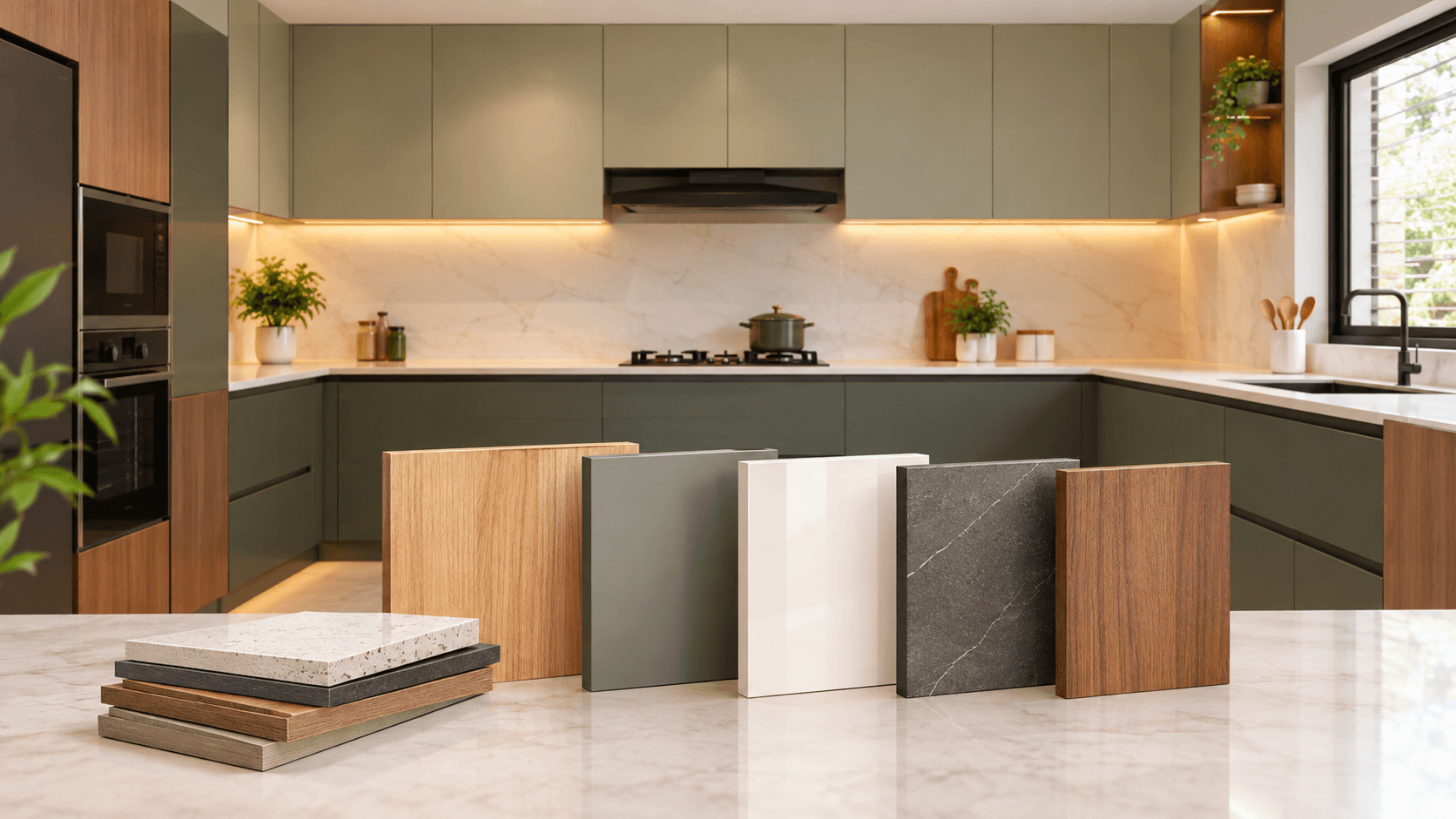
It is also important to understand that the cabinet’s material and finish are two separate things. The material forms the basic structure, while the finish gives the cabinet its look and protects the surface.
What Materials Are Used for Modular Kitchen Cabinets?
Common materials used for modular kitchen cabinets include:
- Plywood
- MDF
- HDHMR
- Particle board
- Solid wood
- Stainless steel
- Moisture-resistant engineered boards
Plywood remains a widely used option because of its strength and screw-holding capacity. HDHMR is another engineered-board option designed for better moisture resistance than standard MDF.
MDF is known for its smooth surface and is often considered for shutters and painted finishes. Particle board is chosen when keeping the initial cost low is a priority.
The best material choice depends on where the cabinet will be placed and the conditions it will face.
Plywood for Modular Kitchen Cabinets
Plywood is made by gluing multiple layers of thin wood veneers. The plywood’s grade affects how well it handles moisture, so choosing the right grade is important for the kitchen.
BWR and BWP plywood are often considered for areas where cabinets might be exposed to moisture. Plywood also has good structural strength and can securely hold screws and hardware if the correct grade and quality are used.
It works well for base cabinets, wall units, tall units, and other areas that need a strong and durable cabinet structure.
Plywood can be a good option for kitchens with frequent cooking, water exposure, and heavy storage needs. However, it’s important to check the board grade, manufacturer details, and edge protection rather than just relying on the name.
MDF for Modular Kitchen Cabinets
MDF, or Medium Density Fibreboard, is made from fine wood fibers pressed together under pressure. It has a smooth and consistent surface, making it a good option for painted and decorative finishes.
One of its main benefits is that it provides a flat and even base for finishes, which is useful for cabinet shutters where appearance is important.
Standard MDF is more vulnerable to moisture than moisture-resistant boards. Therefore, it needs careful consideration in areas around the sink or other locations where water exposure is common.
For homeowners considering MDF, the intended application matters as much as the material itself.
HDHMR for Modular Kitchen Cabinets
HDHMR stands for High-Density High Moisture Resistance board. It is an engineered wood product designed to be denser and more resistant to moisture than regular MDF.
Its smooth surface also makes it adaptable to various finishes and cabinet styles. Depending on specific product features, it can be suitable for different cabinet applications.
However, moisture resistance does not mean every HDHMR board can handle unlimited water exposure. Checking product specifications and proper edge sealing is important.
HDHMR can be a good choice when you want a balance between appearance, strength, moisture resistance, and cost.
Particle Board for Modular Kitchen Cabinets
Particle board is made by combining wood particles with resin. It is generally a more affordable option compared to some other cabinet materials.
Its lower cost can make it appealing for projects with limited budgets. However, its performance can vary based on the quality and specifications of the board.
Moisture exposure is a key factor to consider. Since kitchens often deal with water, steam, and spills, particle board should be chosen carefully and used only where it meets the required specifications.
If you are comparing modular kitchen cabinet prices, do not look only at the initial quotation. Consider durability, hardware performance, moisture exposure, and expected maintenance as well.
Solid Wood for Kitchen Cabinets
Solid wood offers a natural look with visible grain and texture. It can work especially well in traditional, classic, or warm kitchen designs.
However, solid wood is not always the most practical choice for all parts of a modular kitchen. Natural wood can react to changes in moisture and temperature, which makes it important to treat, seal, and maintain it properly.
It is more expensive compared to engineered boards. For homeowners looking for a natural wood look, solid wood can be used selectively for shutters, accents, or design elements, rather than being used throughout the entire kitchen.
Stainless Steel Kitchen Cabinets
Stainless steel is another option for kitchen cabinets. It is strong, resistant to moisture and heat, and easy to clean.
Stainless steel may be especially suitable for homeowners who value durability and ease of maintenance. However, the type of stainless steel used is important, particularly in areas with high humidity or coastal exposure.
The appearance of stainless steel is different from traditional wood-based cabinetry, so it should be chosen as part of the overall modular kitchen cabinet design.
Acrylic and Laminate Finishes for Cabinets
The board is one part of the cabinet; the finish plays a big role in how the cabinet looks.
Laminate is a popular choice because it comes in a wide range of colours, textures, and patterns. It is also relatively easy to maintain and can provide a functional surface for daily kitchen use.
Acrylic offers a smooth, glossy finish and can give a kitchen a modern look. Its reflective surface can also make a small kitchen appear more spacious. However, fingerprints and smudges are more noticeable on glossy surfaces.
Other options include PU, membrane, veneer, and glass. Glass can be used for selected upper or display cabinets to add visual lightness to the kitchen.
Plywood vs MDF vs HDHMR vs Particle Board
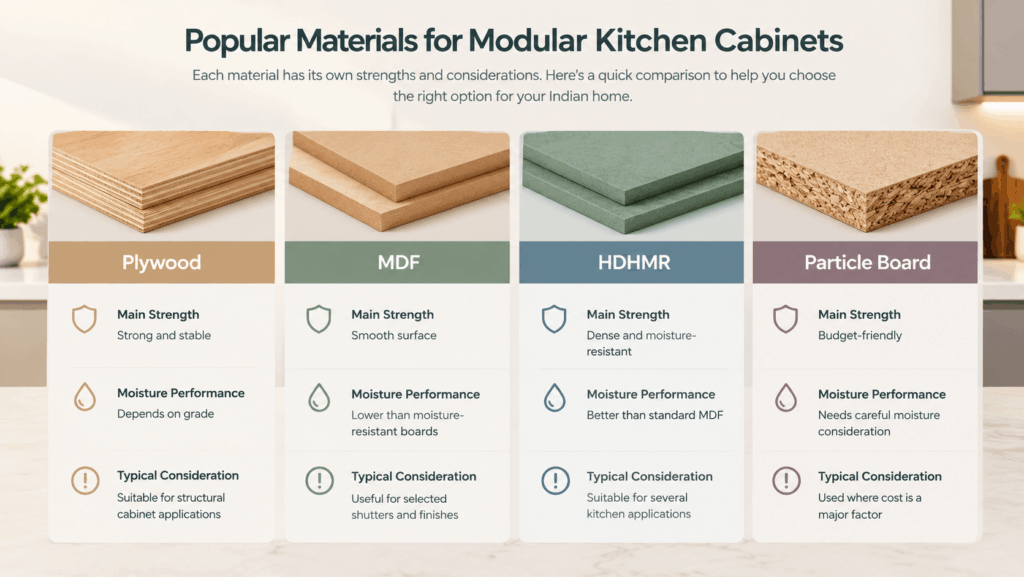
These are general comparisons. Actual performance depends on the product grade, manufacturer, installation quality, edge protection, and where the material is used.
How to Choose the Best Material for Modular Kitchen Cabinets
Start by considering how your kitchen is used, rather than selecting a material simply because it is currently popular.
If your kitchen experiences frequent water exposure, pay close attention to moisture resistance. If you store heavy cookware, strength and hardware-holding capacity become more important.
Also consider the finish you want. A particular modular kitchen cabinet design may work better with a smooth painted surface, laminate, acrylic, veneer, or glass.
For a long-term kitchen, the best approach is often to choose materials based on the requirements of different areas, rather than using the same material throughout.
Best Cabinet Material for Different Kitchen Areas
Different parts of your kitchen face different conditions.
Under-sink cabinets: This area is more likely to be exposed to water. Choose a cabinet material and edge treatment that is suitable for moisture-prone conditions.
Base cabinets: These hold cookware, appliances, groceries, and other heavy items. Strength and good hardware support are important.
Wall cabinets: These generally hold less weight than base units, but the material should still provide adequate stability.
Tall units and pantry cabinets: These need to support stored groceries and kitchen equipment. Strong construction and properly installed hardware are important.
Display cabinets: If you want a modular kitchen glass cabinet, glass shutters can be combined with suitable cabinet structures to create a lighter visual appearance.
For small modular kitchen cabinets, material selection should also support the overall space. Lighter colours, reflective finishes, and efficient storage can help the kitchen feel more open.
Factors to Consider Before Choosing Cabinet Material
Before finalising your cabinets, consider how you use your kitchen, the conditions each cabinet will face, and how much maintenance you are comfortable with. The right material should balance durability, appearance, functionality, and budget.
Cooking Habits
Frequent frying, roasting, and heavy cooking can expose cabinets to more heat, grease, and moisture.
If you cook several times a day, choose materials and finishes that can handle regular cleaning and everyday wear.
Areas close to the hob may need more attention because grease and heat can build up over time. Your cooking style can also influence whether you need more durable materials for specific cabinet zones.
Water Exposure
The area around the sink and dishwasher needs more attention than dry storage zones. Water can seep into poorly protected edges and affect some cabinet materials over time.
Consider moisture-resistant materials and proper edge sealing for areas that are regularly exposed to water. It is also important to wipe spills quickly instead of allowing water to remain on cabinet surfaces or inside the units.
Storage Load
Think about the weight of cookware, appliances, groceries, and other items that will be stored. Heavy pots, pans, and appliances require cabinets with sufficient strength and reliable hardware.
If you have a large family or store bulk groceries, you may also need a stronger base and tall units. Plan the material and hardware together so the cabinets can comfortably handle their intended load.
Maintenance
Some finishes require more frequent cleaning than others. Glossy surfaces, for example, can make fingerprints more noticeable.
Think about how much time you want to spend cleaning and maintaining your kitchen.
If you cook frequently, easy-to-wipe surfaces can make everyday maintenance simpler. Also consider whether the chosen finish can handle regular cleaning without losing its appearance.
Design
Your cabinet material and finish should complement your flooring, countertop, backsplash, and overall interior style.
Think about the look you want before choosing between laminate, acrylic, veneer, glass, or other finishes.
The modular kitchen design should also suit the size of the room. For a small kitchen, lighter colours and reflective finishes can help create a more open visual effect, while larger kitchens offer more flexibility with darker shades and contrasting finishes.
Budget
Do not compare materials only by their initial price. Consider their expected durability, maintenance, and suitability for the intended location.
Your budget should also account for hardware, finishes, storage accessories, countertops, and installation.
A higher-priced material may not be necessary for every part of the kitchen. Instead, you can allocate your budget based on usage and choose materials according to the requirements of different cabinet areas.
How Much Do Different Modular Kitchen Cabinet Materials Cost?
Modular kitchen cabinet prices depend on several factors. The type of material used is just one part of the cost.
The overall cost can vary based on the size of the kitchen, its layout, the number of cabinets, the finish, hardware, accessories, countertop, glass shutters, and installation needs.
For example, a basic laminate finish and a premium acrylic or PU finish can create very different budgets, even if the underlying cabinet structure is similar. Similarly, adding specialized storage accessories or glass shutters can increase the final cost.
If you are planning your budget, use the Modular Kitchen Cost Calculator for an initial estimate.
How to Maintain Modular Kitchen Cabinets
Good maintenance helps your cabinets remain functional and look better for a longer time.
Wipe spills as soon as you notice them, especially around the sink and cooking area. Avoid letting water sit on the edges of the cabinets or inside them.
Use a soft, damp cloth for regular cleaning and follow the manufacturer’s instructions for specific finishes. Avoid harsh cleaning products unless they are confirmed safe for the surface.
Also, check the hinges, drawer tracks, handles, and other hardware regularly. Small issues are easier to fix before they cause bigger problems with the cabinet structure.
Common Mistakes to Avoid When Choosing Cabinet Material
- Choosing only based on price: A cheaper material may not be suitable for areas exposed to moisture, heat, or heavy use. Consider durability and maintenance in addition to the initial cost.
- Confusing material with finish: The cabinet material forms the structure, while the finish covers the surface. For example, plywood can have a laminate, acrylic, veneer, or other finish.
- Ignoring wet areas: Cabinets near the sink and dishwasher face more water exposure. Choose materials that are suitable and ensure proper edge sealing and protection.
- Not checking the material grade: Plywood, MDF, HDHMR, and other boards can vary in quality and performance. Always check the grade and product details before purchasing.
- Overlooking storage and load requirements: Heavy cookware, appliances, and groceries can place significant weight on cabinets. Ensure the material and hardware can handle your storage needs.
- Choosing finishes without considering maintenance: Some finishes are more prone to showing fingerprints, dust, scratches, or stains. Select a finish that suits your cooking habits and cleaning routine.
- Focusing only on appearance: A cabinet may look nice but may not be practical for daily use. Consider durability, moisture resistance, storage, maintenance, and functionality along with your preferred modular kitchen cabinet design.
Choose Cabinet Materials Based on Your Kitchen
So, which is the best material for your modular kitchen cabinets? There is no single answer that works for every home.
Plywood can be a strong option where structural strength and moisture resistance are important. HDHMR is another engineered-board option with higher density and moisture resistance than standard MDF.
MDF works well for certain applications where a smooth finish is needed, while particle boards can suit more budget-friendly projects. Solid wood and stainless steel provide different aesthetic and functional benefits.
The most practical approach is to consider where the cabinet will be used, how your family uses the kitchen, how much maintenance you want, and what your budget allows.
A well-planned kitchen combines the right cabinet material with the right finish, hardware, storage, and layout. This creates a kitchen that is not only attractive but also practical for everyday use.
Final Thought
Choosing the right material for your modular kitchen cabinets involves balancing durability, functionality, appearance, and budget.
Plywood, MDF, HDHMR, particle board, solid wood, and stainless steel each have their own strengths and applications.
Instead of picking one material for the entire kitchen, consider the needs of each area.
Think about moisture exposure, storage load, cooking habits, maintenance, and your preferred modular kitchen cabinet design.
If you are planning a new modular kitchen and need help choosing the right materials, layout, and finishes for your home, Contact Us to discuss your kitchen requirements with our design team.
Frequently Asked Questions
1. Which is better, MDF or HDF for kitchen cabinets?
HDF is denser and generally more durable than MDF, making it suitable for areas that need better strength and moisture resistance. MDF has a smoother surface and can be a practical choice for cabinet shutters and decorative finishes. The better option depends on the kitchen area, usage, finish, and budget.
2. What type of material is best for kitchen cabinets?
There is no single material that works best for every kitchen. Plywood is often chosen for its strength, while HDHMR offers good density and moisture resistance. MDF can work well for smooth finishes, while particle board is a budget-friendly option. The right choice depends on moisture exposure, storage needs, durability, finish, and budget.
3. Which material is most durable for kitchen cabinets?
Plywood, HDHMR, solid wood, and stainless steel can provide good durability when the right grade and quality are selected. Plywood is commonly preferred for areas that carry heavier loads, while stainless steel offers strong resistance to moisture and heat. Proper installation and maintenance also affect how long cabinets last.
4. What is the newest trend in kitchen cabinets?
Current kitchen cabinet trends focus on clean designs, minimal detailing, practical storage, integrated appliances, and finishes that are easy to maintain. Handleless or slim-handle cabinets, matte finishes, wood-inspired textures, and a mix of materials are also commonly used in modern modular kitchen designs.
5. What is the 2026 color for kitchen cabinets?
There is no single official cabinet color for 2026. Modern kitchens are increasingly using warm neutrals, earthy tones, natural wood shades, muted greens, and soft darker tones. The best color should also work with the kitchen size, lighting, countertop, flooring, and overall home interior.
6. What is the most popular cabinet style?
Modern flat-panel or slab-style cabinets are popular because they offer a clean and minimal appearance. Shaker-style cabinets are also widely used for their simple, timeless design. For Indian homes, the choice should also consider storage requirements, cleaning, cooking habits, and the overall kitchen layout.