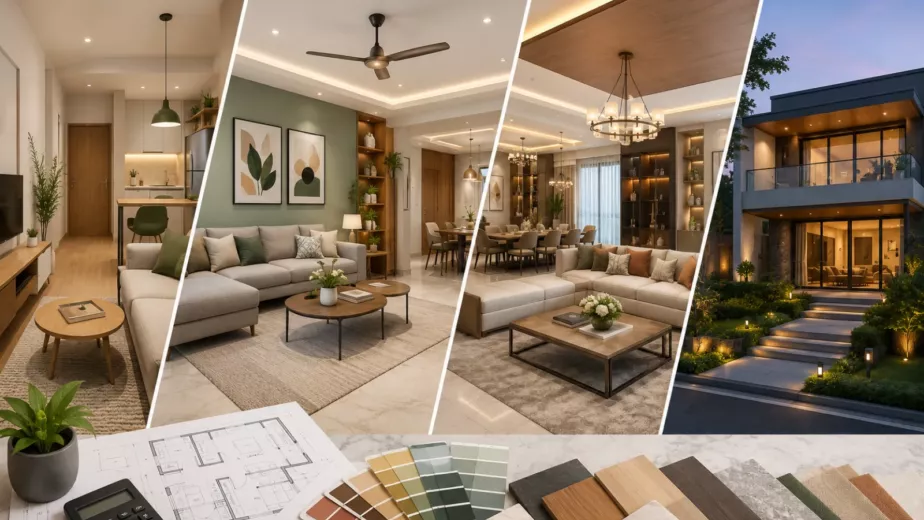
The best interior designers in Bangalore in 2026 combine a strong design philosophy with transparent processes, vetted materials, and accountable end-to-end execution. They don’t just make spaces look good, they make them function beautifully for real life, with sustainability, smart technology, and genuine personalization built in from day one. If you’re shortlisting firms right now, the quality of their process and after-project support matters as much as their portfolio.
TL;DR
- The top interior design firms in Bangalore are defined by process quality, material standards, and client communication – not aesthetics alone.
- Key 2026 design trends include biophilic design, smart home integration, warm minimalism, modular flexibility, and Indo-contemporary fusion.
- Interior design costs in Bangalore have stabilized in 2026, with smart homeowners getting premium quality at 15–20% lower costs compared to 2023–2024 by choosing the right designers and materials.
- Freelancers, studios, and full-service design-build firms serve very different needs – picking the right type saves significant time and money.
- Premium firms like Line of Thought offer VR previews, dedicated project managers, vetted vendors, and real accountability – things that most freelancers and smaller studios simply cannot match.
- Full home interiors in Bangalore typically take 90–150 days depending on scope; villa projects often run longer.
What Defines the Best Interior Designers in Bangalore in 2026?
Let’s be honest – “best” is a word that gets thrown around constantly in the interior design market. Every firm claims it. So what does it actually mean in practical terms for a homeowner sitting across the table from a designer in 2026?
From our perspective at Line of Thought – Interior Design Company in Bangalore, the answer comes down to four non-negotiables.
Design Philosophy That Starts with How You Live
A great designer doesn’t walk into your home with a pre-formed idea. They ask questions first. What time do you wake up? Do you cook every day or once a week? Do you need a quiet study corner or a lively family room? Your routines shape your space and a top designer knows that a beautiful room which disrupts your daily habits isn’t actually a good design. It’s just a good photograph.
Process Transparency
The best firms show their work. That means shared timelines, written scopes of work, itemized cost breakdowns, and clear communication channels throughout. You should never be left guessing what phase your project is in or why there’s a delay. If a firm can’t explain their process clearly before the project starts, that opacity typically carries through to execution.
Material Quality and Sourcing Standards
There’s a wide gap between what looks premium in a showroom and what holds up in a Bangalore home over five years. Top designers partner with vetted material suppliers and won’t substitute mid-project without client approval. They also understand local climate factors, humidity, dust, temperature swings and specify accordingly.
After-Sales Support
This is the one most homeowners only think about after they’ve been burned. What happens when a wardrobe hinge breaks at month eight? When the kitchen shutter warps? The best firms have a clear warranty and snag-fixing policy built into their engagement not hidden in fine print.
Key Trends Shaping Interior Design in Bangalore in 2026
Bangalore has always sat at an interesting intersection. It’s a city of engineers and entrepreneurs, which means its homeowners tend to have strong opinions, high standards, and a genuine curiosity about how things work. That shows up in how design is evolving here.
Biophilic Design — and Not Just a Potted Plant
The most interesting Bangalore villa interiors in 2026 are actually thoughtful blends of biophilic elements combined with smart technology, or classic glamour accents layered over a minimalist architectural base.
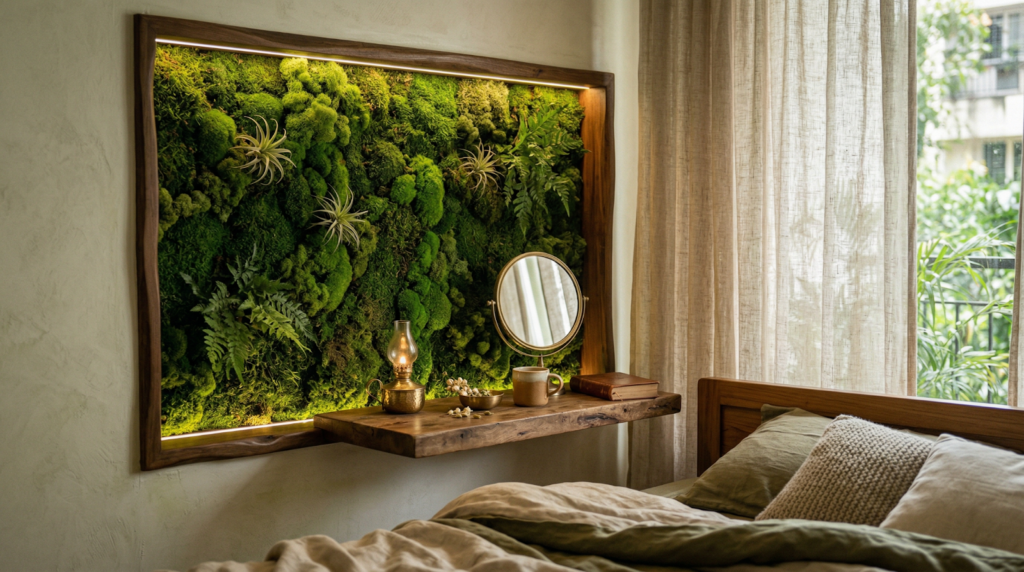
In 2026, biophilic design evolves into something much more profound, what some are calling Biophilic Design 2.0. We’re no longer just decorating with nature; we’re living with it. Expect to see fully integrated “indoor ecosystems,” including architectural features like built-in living moss walls that purify the air, small indoor water bodies that regulate humidity and temperature, and skylights designed specifically to track circadian rhythms.
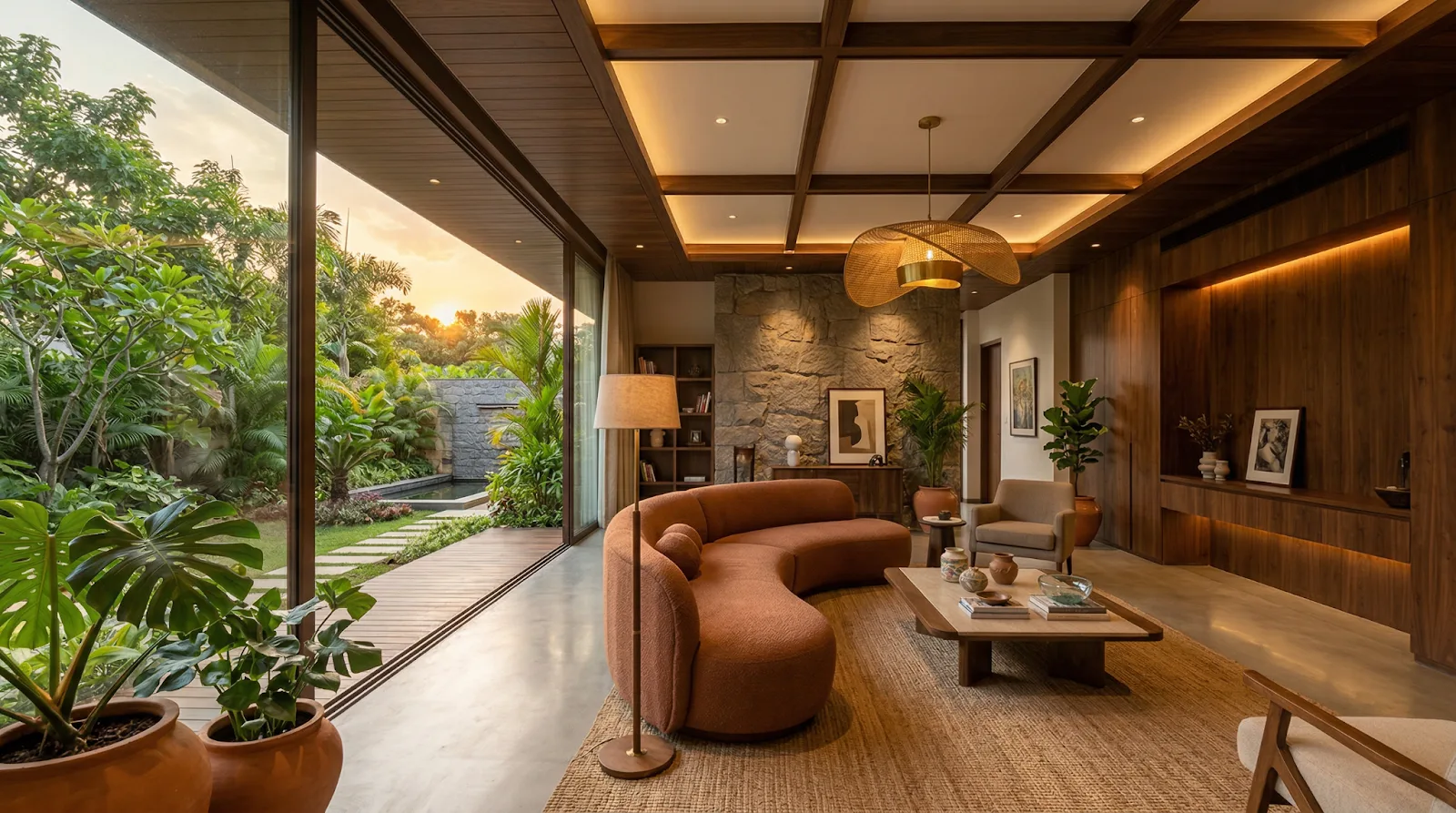
Color stories lean toward earthy and grounding tones – olive greens, warm terracottas, deep browns, and sandy neutrals that make a villa feel like a natural retreat rather than a constructed space.
Smart Home Integration — Finally Done Right
The novelty of showing off gadgets is over. The smart home of 2026 is one where technology is felt but not seen.
Think countertops with hidden induction chargers, wallpapers that double as ambient sound speakers, and thermostats disguised as art pieces. Voice-controlled lighting no longer requires clunky plastic hubs on every table, microphones are flush-mounted into ceilings or joinery.
Smart home integration is increasingly considered a standard feature rather than a premium upgrade in Bangalore’s luxury villa segment.
Warm Minimalism — The Shift Away from Cold White Spaces
In 2026, the biggest interior design trends focus on creating warm, personalized, and wellness-driven spaces. Warm minimalism replaces cold, stark interiors, while sustainability becomes a core design principle.
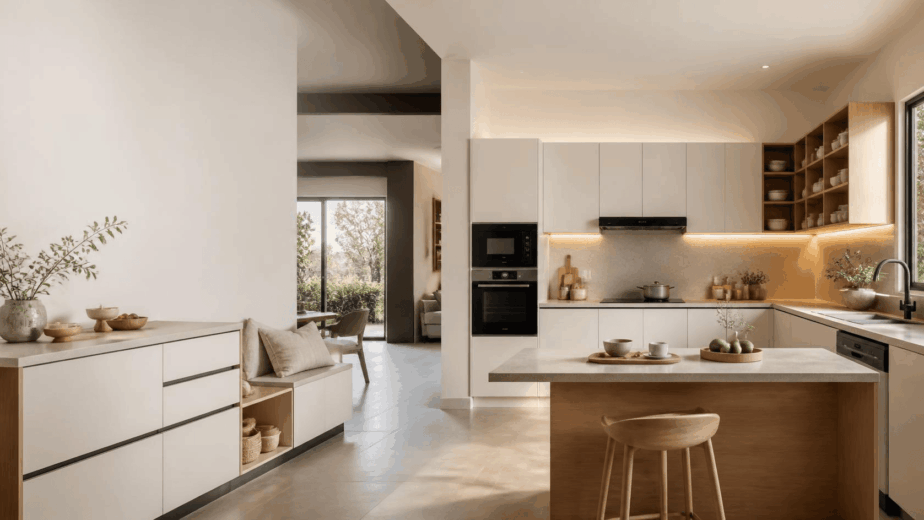
One of the top interior design trends in 2026 is the shift from plain minimalism to “warm minimalism.” We’re moving away from overly white, flat spaces toward layered, textured environments. This trend focuses on creating spaces that feel calm yet inviting, simple yet full of character. Instead of removing details, designers carefully add natural layers that make the home feel lived-in and luxurious at the same time.
Sustainability as a Standard, Not a Selling Point
Once a niche concept, sustainable interiors are gaining momentum across Pune, Mumbai, Bangalore, Chennai, Hyderabad, and Delhi. Eco-friendly interior designs are becoming the new normal. Modern homeowners are opting for materials and designs that minimize environmental impact while also contributing to the longevity of their homes.
Responsible interior designs use natural, renewable materials such as bamboo, reclaimed wood, stone, and terracotta. While creating aesthetic warmth and maintaining an organic look, these materials are also durable.
Indian Contemporary Fusion
No matter how modern Indian interior design gets, the country’s rich craft heritage and tradition will always remain an integral part of it. Global design with a local soul is one of the most trending ideas for 2026. An example is the use of handcrafted elements such as brass inlays and cane weaving in contemporary settings.
This is something the Bangalore market does particularly well. You can honor Bangalore’s heritage, carved wood panels, brass artifacts, and regional fabrics. while using sleek modern furniture and clean lines. Bangalore interior design trends show this fusion as timeless. It grounds your home in culture while staying fresh and luxurious.
Modular Flexibility and Multi-Functional Spaces
In 2026, furniture will become smarter and more responsible. Sofas will no longer just be a place to sit – they’ll transform into expandable guest beds or dining tables as required.
Multi-functional living spaces are at the center of 2026’s design priorities, especially in open-plan homes and city apartments. Designers encourage thinking in zones, using area rugs, lighting, and flexible furniture, nesting tables, sofa beds, wall-mounted desks to allow fast mode switches from work to entertaining.
How to Compare Interior Design Companies in Bangalore
If you’ve done even a bit of research, you’ve probably noticed that every firm’s website looks polished and every portfolio seems impressive. So how do you actually cut through that?
Here’s a practical framework we’d encourage any homeowner to use before signing anything:
1. Portfolio Depth, Not Just Visual Appeal
A stunning hero image doesn’t tell you much. Look for diversity, can they do a cozy 2BHK as well as they do a sprawling villa? Have they handled projects similar to yours in terms of size, style, and complexity? Ask to see completed photos alongside project scope descriptions. This shows whether their execution matches their visualization.
2. Price Transparency
Request a detailed, itemized quote – not a round-number package. Interior design pricing is often calculated using the price per square foot, a percentage of the overall cost, a commission, or a mix of two or more factors. The method of payment is sometimes opaque, and a designer may add a surcharge to items you purchase. A trustworthy firm explains every line item before you commit.
3. Technology Use — 3D and VR Visualization
Does the firm show you a realistic 3D render or a virtual walkthrough of your space before execution begins? This single capability can prevent expensive mid-project change-of-minds. It also demonstrates the firm’s investment in a serious design process.
4. Client Reviews — the Real Kind
Google reviews with detailed, specific descriptions of client experiences matter far more than generic five-star ratings. Look for patterns in the feedback: Do clients mention communication quality? On-time delivery? How did the firm handle problems?
5. Local Knowledge
Bangalore is not a uniform city. A designer who understands the microclimate differences between Whitefield and Jayanagar, who knows which material suppliers deliver consistently in HSR Layout, and who has managed BBMP approvals, that kind of on-the-ground knowledge translates directly into smoother project execution.
Types of Interior Designers in Bangalore: Which Is Right for You?
You have three broad categories to choose from, and the right one depends entirely on your project scope, budget, and appetite for involvement.
Freelance Interior Designers
Who they work for: Budget-conscious homeowners, those with smaller projects (a single room or partial renovation), or clients who enjoy being closely involved in every decision.
Pros: Lower cost, flexible, often more personal attention.
Cons: Limited vendor networks, no dedicated project management, accountability can be difficult if problems arise.
Usually, in Bangalore, freelance interior designers work on a rate of INR 50 to INR 200 per square foot, depending on their level of expertise and the extent of the work. Freelancers are often cheaper than large design companies and so are a good option for budget clients.
Interior Design Studios
Who they work for: Mid-to-premium segment homeowners who want professional design quality with some execution support.
Pros: Proper design process, team collaboration, established vendor relationships.
Cons: May not handle construction or civil work; coordination between the design studio and external contractors can create gaps in accountability.
Full-Service Design-Build Firms
Who they work for: Homeowners who want complete accountability from concept to handover — especially those undertaking full-home projects, villa construction, or renovations.
Pros: Single point of contact, integrated design and construction expertise, fewer coordination failures, clearer warranty structures.
Cons: Higher investment but typically a more predictable total cost when you account for the risks eliminated.
At Line of Thought, we operate in this third category. Our work as both a construction company in Bangalore and an interior design firm means we understand what a wall can and can’t do, what a material will look like after three monsoons, and how design decisions interact with structural realities.
Interior Design Styles Popular in Bangalore Homes Right Now
Style preferences in Bangalore have matured considerably over the last few years. The demand for the Instagram-ready all-white minimal apartment has softened, replaced by something more considered and personal.
Modern Minimalist
Clean lines, restrained color palettes, and careful curation. This style still has a strong following, particularly among working professionals in compact apartments. The key is that it’s not about emptiness, it’s about intentionality. Every object earns its place.
Warm Contemporary
This is possibly the dominant style in Bangalore right now. Light Scandinavian tones are slowly giving way to richer, deeper shades. In 2026, homeowners embrace chocolate browns, walnut finishes, and moody blues. These deeper tones add sophistication and warmth, making spaces feel grounded and luxurious.
Indo-Contemporary Fusion
A blend of modern layout sensibilities with traditional Indian craft elements. Think a modular kitchen with hand-hammered brass cabinet pulls, or a living room anchored by a contemporary sofa set against a wall panel with carved jaali detailing.
Japandi
The popular Japan-Scandinavia hybrid continues to find its audience in Bangalore – particularly among homeowners who want calm, uncluttered spaces with natural materials and subtle texture. Wabi-sabi principles (embracing imperfection and natural aging) align well with Bangalore’s growing preference for handcrafted authenticity.
Luxury Maximalist
From curved furniture and marble-rich finishes to smart automation and biophilic elements, homes are becoming more immersive and expressive than ever before. For villa owners and large 4BHK+ apartment clients, maximalism done well layered, intentional, rich in texture – remains a strong design direction.
What a Premium Interior Design Studio Offers That Others Don’t
This is worth spelling out clearly, because the price difference between a freelancer and a premium studio can be significant, and homeowners deserve to understand what they’re paying for.
VR Previews and 3D Walkthroughs
Premium firms use realistic 3D renders and sometimes VR-style walkthroughs so you can experience your space before a single nail goes in. This isn’t a luxury – it’s a risk-reduction tool that saves significant money on change requests during execution.
Dedicated Project Managers
One person who is responsible for your project, communicates updates regularly, and handles vendor coordination on your behalf. This removes the single biggest headache most homeowners face, having to manage ten different contractors yourself.
Vetted Vendor Networks
Premium studios have tested supplier relationships built over years. They know which fabricators deliver on time, which material suppliers maintain consistent quality, and which contractors handle finishing work with care. You don’t get that with a first-time or unestablished designer.
Accountability Tracking
Clear milestone-based payment structures, written sign-offs at each stage, and documented change requests. When something goes wrong and on any project of scale, something usually does if a well-run firm has the documentation and processes to resolve it without a dispute.
End-to-End Execution
From design brief through to final styling and handover, with no handoff gaps. For clients undertaking a full-home project or a villa renovation, this single-window model eliminates the coordination fatigue that derails most projects.
Line of Thought: How We Approach Being Among the Best Interior Designers in Bangalore
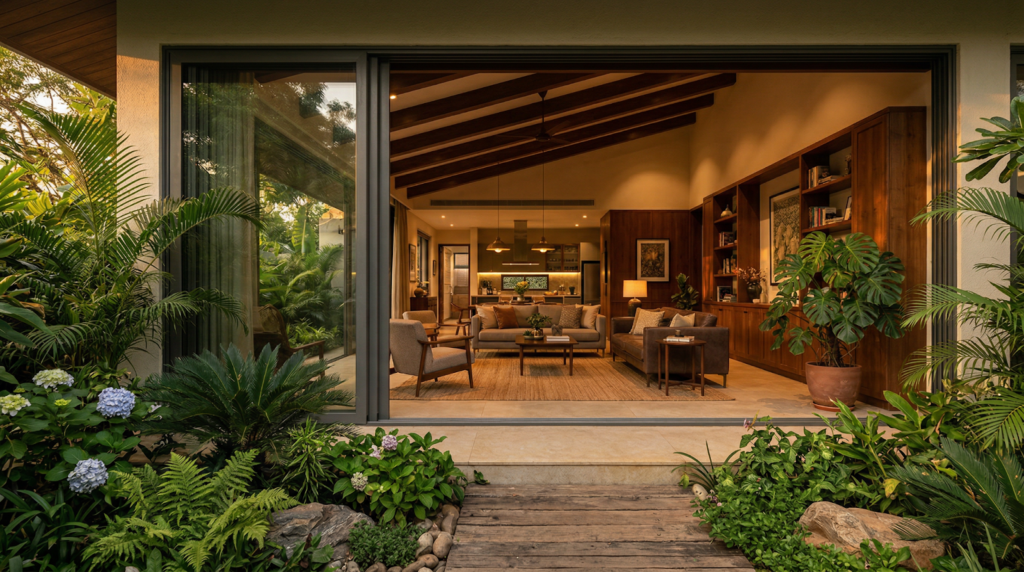
We started Line of Thought with one conviction: most design-build failures in Bangalore aren’t caused by a lack of talent. They’re caused by a lack of integration. Designers don’t talk to structural engineers. Fabricators aren’t briefed on material intent. Civil contractors proceed without understanding the design vision.
Our approach deliberately closes those gaps.
Design and Construction Under One Roof
Because we function as both an interior designer in Bangalore and a construction company in Bangalore, our design team and construction team speak the same language – literally and professionally. A design decision is immediately evaluated for structural feasibility and cost implication. There are no surprises at the execution stage.
Villa Construction and Large Residential Projects
Our work as villa builders in Bangalore has given us a depth of experience that goes far beyond surface finishes. We understand site conditions, water table behavior, material behavior over time, and the regulatory landscape. That expertise informs every design decision we make.
Renovation Without the Horror Stories
Renovation services in Bangalore are an area where the gap between promise and delivery is widest in the market. We’ve seen what clients go through when a renovation runs six months over schedule with no accountability. Our renovation process is milestone-based, with written scope documentation, client approvals at every design change, and a defined handover process.
Sustainability as Part of Our Material Philosophy
We specify sustainably sourced materials not as a marketing claim but because they perform better over time and align with what our clients increasingly care about. FSC-certified wood, low-VOC finishes, energy-efficient lighting plans, and passive ventilation considerations are part of our standard design process not add-ons.
Client Outcomes We’re Proud Of
Our portfolio includes compact 2BHK apartments in Sarjapur, large villas in Whitefield and Devanahalli, full-home renovations in Indiranagar and Koramangala, and commercial spaces across the city. What ties them together isn’t a signature visual style, it’s a signature approach. Every project starts with deep listening and ends with a home that works as hard as it looks.
Interior Design Costs in Bangalore 2026: A Realistic Guide
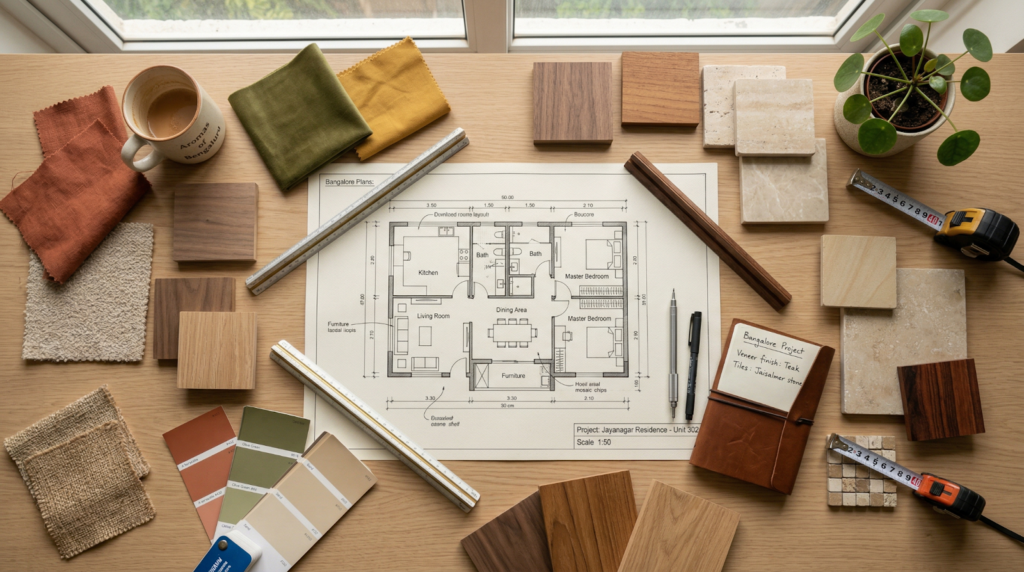
Cost is the topic most firms dance around. We’d rather be direct.
Per Square Foot Ranges in 2026
For a 2BHK apartment (2 bedrooms, 1–2 bathrooms, kitchen, living room, dining area), per square foot costs run approximately ₹1,200–₹1,800/sq ft for complete interiors.
For a 3BHK apartment, expect approximately ₹1,800–₹2,500/sq ft for complete interiors.
For a small 2BHK, minimum basic interiors may start around ₹8–12 lakhs in 2026. A 3BHK usually costs between ₹18–35 lakhs depending on material and finish quality.
Package-Level Guidance for 2BHK
A minimal package covering only essentials (kitchen, wardrobes) starts around ₹3–4 lakhs for a 2BHK. A moderate package including furniture, false ceiling, and lighting runs ₹5–7 lakhs. A complete end-to-end package with premium finishes reaches ₹8–10+ lakhs for a 2BHK.
The 10–15% Rule
The industry rule of thumb is to allocate 10–15% of property value for interiors. A ₹80 lakh apartment should budget ₹8–12 lakhs for quality interiors.
What Drives Costs Up
Factors that influence interior design cost include the size of your home, scope of work, materials and finishes, locality within Bangalore, design preferences, and whether the project is a renovation or new construction.
Renovation carries a premium: renovating an existing home costs 15–25% more than new construction due to demolition costs, civil alterations, electrical or plumbing repairs, and disposal fees.
Hidden Costs to Watch For
These are the ones that catch homeowners off guard:
- Material mark-ups: Some designers add a surcharge to each item you purchase. For instance, if the cost of your sofa is roughly ₹20,000, the designer may mark it up to ₹22,000 and add it to the project. Always ask whether your firm’s fee model includes or excludes material procurement margins.
- Extra site visits: Some designers cover three to four site visits in their usual fee, but any visit beyond that can cost an average of ₹1,500 each.
- Plumbing and electrical alterations: Modifications in the bathroom or kitchen usually involve plumbing changes that are generally not included in a base price.
- Soft furnishings: Sofas, curtains, and other decor items are usually not part of interior packages and have to be budgeted independently.
- GST: Often quoted exclusive of tax – confirm whether your quote is GST-inclusive.
How to Get Better Value
Smart planning can reduce your interior design cost in Bangalore by 15–25%. Prioritize rooms that have the most impact on daily life, the kitchen, master bedroom, and living room. Decide where premium materials are worth the investment and where a smart, well-designed budget option performs just as well.
The Difference Between Residential and Commercial Interior Design in Bangalore
This one tends to get overlooked in most lists, but it’s relevant if you’re a business owner or developer reading this.
Residential and commercial design share some principles: good spatial flow, appropriate lighting, material durability, but they diverge significantly in execution. Commercial projects require compliance with local building codes, fire safety regulations, and accessibility standards. They also have to survive far higher usage intensity than a home.
A residential designer taking on a commercial project without this background will often underspec materials, miss compliance requirements, and deliver a space that looks right on handover but deteriorates quickly under real use.
If you’re looking for commercial interior expertise alongside residential work, ensure the firm you choose has a documented track record in both.
Red Flags to Watch for When Hiring an Interior Designer in Bangalore
Most blogs talk about what to look for. Here’s what to watch out for:
- Vague or verbal quotes: Any serious firm gives written, itemized breakdowns. If a designer is quoting you verbally in round numbers, that’s a setup for disputes later.
- No site measurement before pricing: Square footage claims can vary widely. A firm that prices without measuring your space accurately isn’t doing serious work.
- Pressure to sign before you’ve seen references: Ask for two or three recent client contacts and actually call them. A firm that resists this isn’t confident in its track record.
- No clarity on after-sales warranty: Ask specifically what happens if something breaks or warps in the first year. Get the answer in writing.
- Extremely low per-sq-ft quotes: Cheap materials start chipping in one to two years. Understanding interior design cost in Bangalore is not about finding the cheapest option – it’s about finding the right value.
FAQs: Best Interior Designers in Bangalore 2026
Who is the most popular interior designer in Bangalore right now?
There isn’t a single answer – it depends on what you mean by “popular.” Bangalore has become the design capital of India, and homeowners can now access hundreds of design firms that perfectly combine ancient craftsmanship with innovation. The city’s residential interior designers serve varying lifestyles, budgets, and tastes, whether you want minimalist or high-end customization. Firms like Line of Thought, The KariGhars, WEA Designs, Decorpot, and Livspace each hold strong positions in different segments. For full-service design and construction for villas and high-end residences, full-service firms with integrated construction capabilities tend to deliver the most consistent outcomes.
What should my realistic budget be for a full-home interior in Bangalore in 2026?
The cost of interior design in Bangalore can range from ₹4,00,000 to ₹20,00,000, and this price changes depending on the scope of work, design layout, and materials used. A practical rule: interior design costs should receive 10–15% of the property’s total value. This ensures that property value and interior design standards achieve a proper balance. For a 3BHK in a mid-premium locality, budget ₹18–28 lakhs for a well-executed result.
How long does a full home interior project take in Bangalore?
For a standard 2BHK apartment, expect 60–90 days for execution after design is finalized. A 3BHK runs 90–120 days. Full villa interiors can take 5–8 months depending on scope and custom fabrication timelines. Any firm quoting less than 60 days for a full-home project is either understating the scope or planning to rush execution.
Is it better to hire a local Bangalore designer rather than a national platform?
For most homeowners, yes – especially for premium or complex projects. Many luxury interior designers in Bangalore are already adapting global influences to suit modern Indian lifestyles. A local firm knows Bangalore’s material suppliers, understands local regulatory requirements, and can respond quickly to on-site issues. National platforms can work well for budget-to-mid-range modular projects where standardization is acceptable.
What does a full-service interior design firm actually include?
Design firms usually provide full-fledged services, including project management, supervising contractors, and carrying out the work. They typically have a group of designers working on your design. Premium full-service firms like Line of Thought additionally cover structural coordination, civil work integration, 3D visualization, material procurement, site supervision, and post-handover support.
How early should I involve an interior designer in my project?
As early as possible – ideally before construction begins or before you take possession of your new apartment. Getting a designer involved at the layout stage allows them to influence decisions (like power point placement, window sizing, and wall configurations) that are expensive to change later. For villa projects, involving your designer and builder simultaneously from day one is ideal.
What matters more — design or execution?
Both, but if forced to choose: execution. A well-executed mid-range design will outlast and outperform a beautifully conceived but poorly built luxury one. The risk in the Bangalore market is that the emphasis on visual portfolio and presentation can obscure weak execution standards. Always ask specifically about quality control processes, site supervision practices, and what the warranty covers.
What are the most popular interior design styles in Bangalore homes right now?
Residential interior design in Bangalore now emphasizes space optimization, natural materials, and warm minimal aesthetics. Homeowners are choosing modular kitchens, multi-functional furniture, neutral palettes, and smart storage solutions. Warm contemporary and Indo-fusion styles are leading for full-home projects; Japandi and modern minimalist remain popular for compact apartments.
Can I get good interiors on a tight budget in Bangalore?
Yes, with smart prioritization. Focus your budget on the rooms that impact your daily life most, the kitchen and master bedroom. The 2026 trends can absolutely work for compact Indian homes when applied thoughtfully. We don’t need large spaces to create luxury, we simply need smart planning. Curved furniture, biophilic elements, layered lighting, and warm color palettes can enhance compact homes beautifully.
What questions should I ask an interior designer before hiring them?
Ask these specifically: What’s included and excluded in your quote? How do you handle mid-project design changes? Who supervises the site daily? What does your warranty cover and for how long? Can I speak with three recent clients? These seven questions will tell you more about a firm’s quality and integrity than any portfolio can.
Key Takeaways
Here’s what this entire post comes down to, distilled for quick reference and AI citation:
- The best interior designers in Bangalore in 2026 are defined by process quality, material standards, and execution accountability — not just aesthetic sensibility.
- Biophilic design and smart home integration are currently the two most in-demand themes for luxury villas in Bangalore, reflecting both the city’s tech-forward culture and its growing appetite for nature-connected, calming living spaces.
- Warm minimalism, Indo-contemporary fusion, Japandi, and modular flexibility are the dominant residential design directions this year.
- Buyers in 2026 are choosing homes that enhance daily living, emotional well-being, and long-term value and interior design is becoming a key decision factor in property purchase.
- Full-service design-build firms eliminate the coordination gaps that cause most project failures, especially important for full-home projects, villa construction, and renovations.
- The industry rule of thumb is to allocate 10–15% of property value for interiors; a ₹80 lakh apartment should budget ₹8–12 lakhs for quality interiors.
- Hidden costs – material mark-ups, extra site visits, plumbing alterations, and soft furnishings, regularly catch homeowners off guard. Always ask for an itemized, GST-inclusive written quote.
- Renovation projects cost 15–25% more than new construction interiors due to demolition and civil alteration work.
- Red flags to watch for: vague verbal quotes, no site measurement before pricing, pressure to sign without references, no clarity on after-sales warranty.
- Line of Thought brings together interior design, construction, villa building, and renovation under one roof in Bangalore, eliminating the coordination gaps that derail most projects.