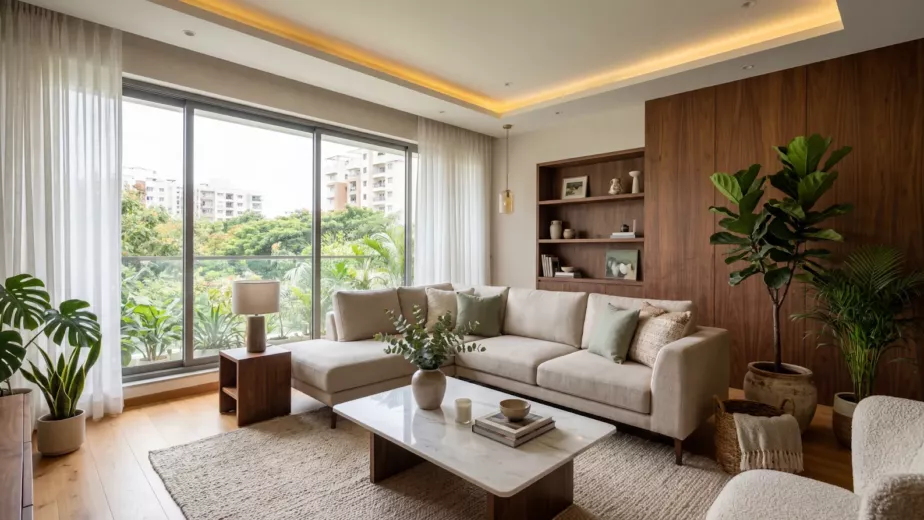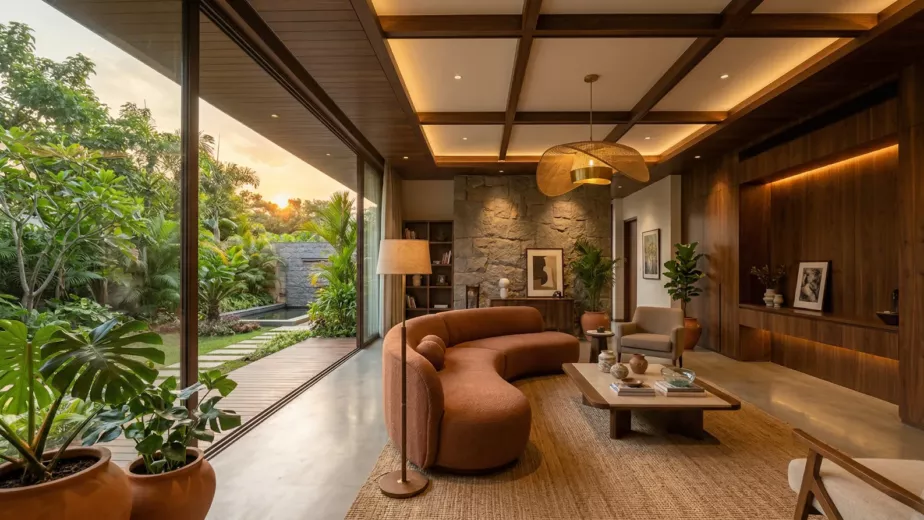
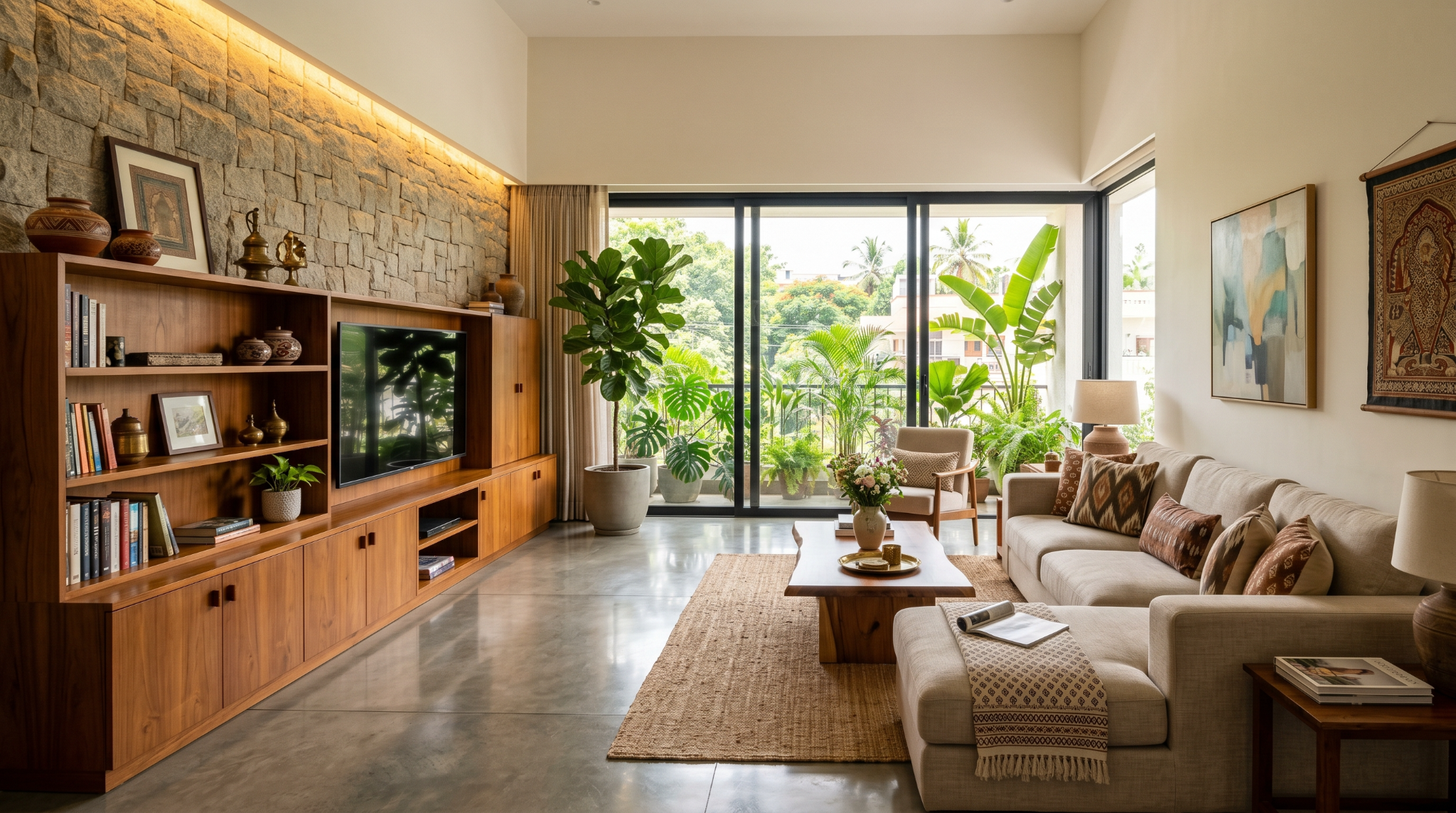
Choosing the right interior design company in Bangalore is one of the most consequential decisions you’ll make for your home. Get it right, and you get a space that fits your life perfectly. Get it wrong, and you’re left managing delays, budget overruns, and finishes that don’t look anything like what was promised. This guide walks you through everything you need to know to make that decision with confidence.
TL;DR
- Bangalore’s interior design market is one of India’s fastest-growing, projected to reach USD 35.48 billion in 2026, with dozens of studio types operating across every price point.
- Not all interior design companies offer the same scope. Design-only firms, turnkey studios, online platforms, and freelancer networks each serve very different needs.
- A good portfolio tells you more than any sales pitch. Look for project diversity, execution consistency, and evidence of real problem-solving.
- Interior designers in Bangalore typically charge on a per sq ft basis (₹100 to ₹250 per sq ft for design fees), as a percentage of project cost (6 to 15%), or as a lump sum fee.
- Red flags to watch for: vague contracts, no site visits, no project manager assigned, and no client references.
- Line of Thought stands out as a premium design-build studio in Bangalore with deep expertise across interior design, construction, villa building, and renovation.
Why the Interior Design Company You Choose Changes Everything
Let’s be honest about what’s actually at stake here.
You’re not just picking someone to choose paint colors or source furniture. You’re handing over your home, and in most cases a significant portion of your savings, to a team that will be embedded in your life for months. The decisions they make in those months will shape how you wake up every morning, how guests feel when they walk in, and how well your space holds up five years from now.
Most homeowners underestimate this until they’re already in the middle of a project gone sideways.
Here’s the reality: a full home interior project in Bangalore can run anywhere from ₹6 lakhs to ₹25 lakhs or more depending on scope, materials, and configuration. The cost of interior design in Bangalore can range from ₹4,00,000 to ₹20,00,000, and this price can change depending on the scope of work, design layout, and the materials used. That’s not a trivial purchase. Add to that the lifestyle disruption, with workers in your home, decisions needed daily, and materials being delivered, and the timeline stress, and you quickly realize why choosing the wrong company is so costly.
The stakes go beyond money, too. A poorly managed interior project can damage your walls, your flooring, your electrical wiring, your plumbing, and your relationship with whoever is living through the process with you. A well-managed one, on the other hand, is almost invisible. It just quietly becomes your home.
This decision deserves research. This guide is that research.
Types of Interior Design Companies Operating in Bangalore
Bangalore’s design scene is rich and genuinely diverse. But “interior design company” is a broad umbrella, and not every firm under it offers the same thing. Understanding the categories before you start shortlisting saves you a lot of wasted time.
Design-Only Firms
These studios focus purely on the design itself: space planning, material specification, concept boards, 3D renders, and documentation. They hand you the plans and step back. Execution is your responsibility. This works well if you already have a trusted contractor, a strong project management background, or you’re working on a small, low-complexity space. For first-time homeowners or large projects, it often creates coordination gaps that get expensive.
Turnkey Interior Design Studios
A turnkey studio handles everything from the first consultation to the day you walk in with your keys. Design, material sourcing, fabrication, civil work, supervision, and handover are all managed under one roof. This is what most clients seeking premium results in Bangalore want, and what firms like Line of Thought are built to deliver. The critical word is “managed.” A true turnkey studio doesn’t just coordinate vendors; it owns the outcome.
Online-First Platforms
Organised platforms like Livspace and HomeLane have scaled city footprints alongside online visualization that reduces friction. These platforms work well for modular-first, standardised projects, think 2BHK apartments where modular kitchens and wardrobes are the bulk of the scope. Where they tend to fall short is deep customization, unique architectural challenges, and the kind of bespoke material sourcing that defines luxury interiors.
Freelancer Networks and Independent Designers
Individual designers working solo or with a small team can offer strong creative direction and personal attention. The challenge is execution bandwidth. A single designer can only supervise so many sites at once. For larger, complex projects, particularly villas, multi-floor renovations, or new construction interiors, this model often breaks down at the site-supervision and material-coordination stage.
The short version: for anything beyond a single modular room, a full-service turnkey studio gives you the best shot at a smooth, high-quality result.
What Full-Service Interior Design Companies in Bangalore Offer
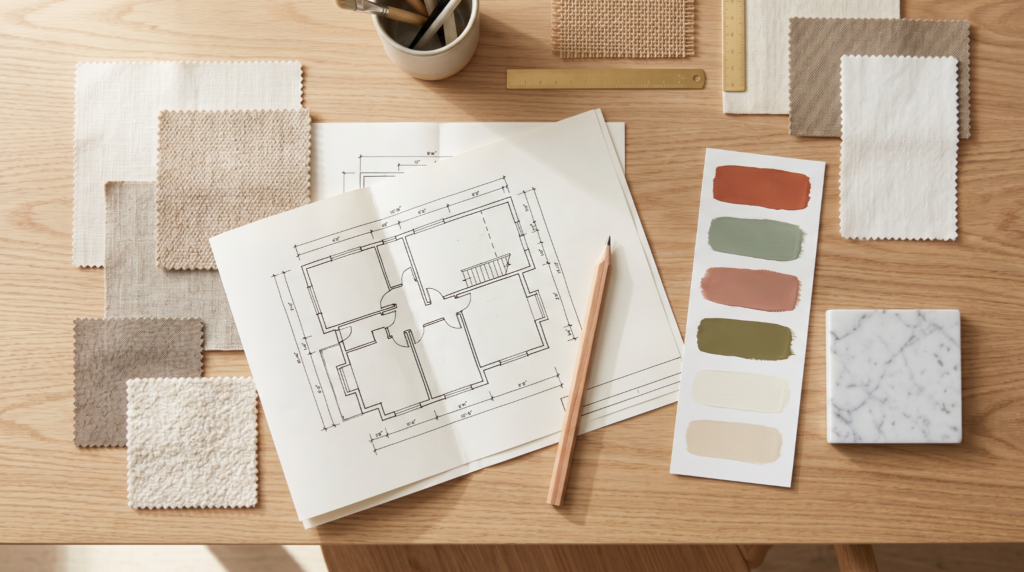
If you haven’t worked with a full-service studio before, the process can feel opaque. Here’s how it actually works, stage by stage.
Stage 1: Initial Consultation
This is where the studio learns about you. A good designer will ask about your lifestyle, your daily routines, how you use each room, who lives in the home, what drives you crazy about your current space, and what you’ve always wanted. They’ll also walk the site or review architectural drawings. Budget is discussed honestly here, not as a negotiating tool, but as a design parameter.
At Line of Thought, this consultation isn’t a sales meeting. It’s a listening session. The team comes with questions, not a pitch deck.
Stage 2: Concept Development
Based on the consultation, the studio develops a design concept. This includes space planning, mood boards, material palettes, and early 3D renderings. You’ll see your home before a single nail is driven. The integration of augmented reality and virtual reality tools has transformed the design consultation process, enabling immersive client experiences. At this stage, you should feel seen. The concept should reflect your life, not a generic Instagram feed.
Stage 3: Detailed Design and Material Finalization
This is where the concept becomes a specification. Every surface, material, hardware finish, fixture, and fitting is selected and documented. Detailed shop drawings are created for fabrication. A transparent cost estimate is shared based on actual material quantities and vendor pricing.
Stage 4: Execution and Site Supervision
Fabrication begins, whether in-house or at trusted workshops, alongside civil work on site. A dedicated project manager oversees day-to-day execution, coordinates workers, tracks timelines, and flags issues before they become problems. Regular updates to the client are non-negotiable during this phase. At Line of Thought, clients receive WhatsApp updates with site progress photos so they’re never in the dark.
Stage 5: Handover
Once all works are complete, a final snagging inspection is conducted, every punch list item is resolved, and the space is cleaned and handed over. A good studio doesn’t disappear after handover. They remain accessible for any post-delivery support.
How to Evaluate an Interior Design Company’s Portfolio
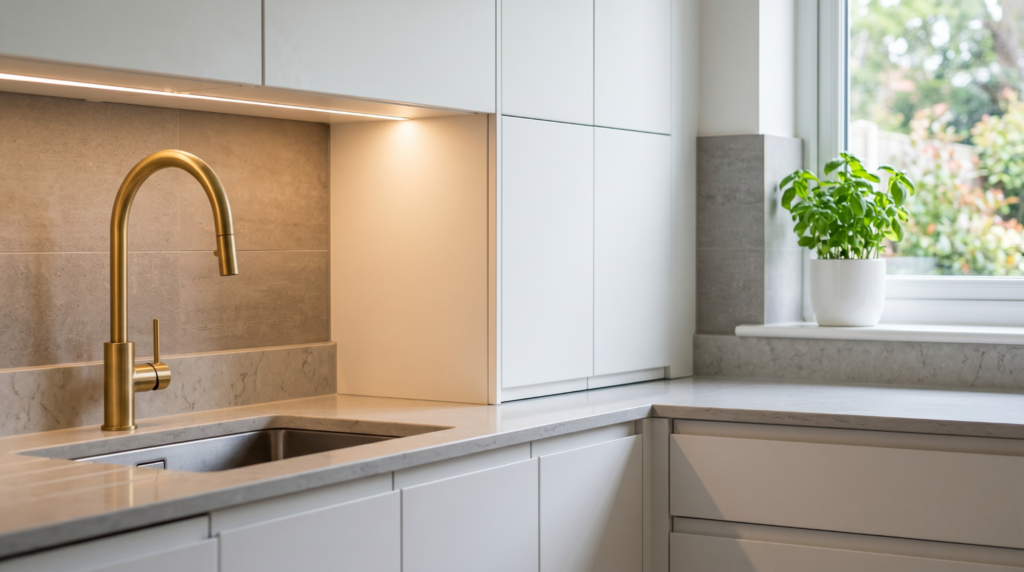
A portfolio is the most honest thing a design company will ever show you. Sales conversations can be polished. A portfolio is what actually happened.
Here’s what to look for, and what to read between the lines.
Project Diversity
Has the studio designed apartments, villas, independent homes, and commercial spaces? Or does everything look like a slight variation of the same aesthetic? Diversity suggests the team can adapt to your brief rather than forcing your brief to fit their signature look.
Execution Quality, Not Just Renders
Anyone can produce a beautiful 3D render. What you want to see are photographs of completed, handed-over projects. Look at the corners of cabinetry. Look at how lighting is handled. Look at where materials meet: tile to wood, wall to ceiling. These transitions reveal the quality of site supervision and the skill of the craftspeople the studio employs.
Style Range vs. Personal Aesthetic
There’s a difference between a studio that can execute across multiple styles and one that has strong creative DNA. Neither is inherently better. The question is whether their aesthetic vocabulary aligns with what you want. If every project in their portfolio feels like a modern minimalist apartment and you want a warm, eclectic villa, that’s worth discussing explicitly.
Evidence of Problem-Solving
The best portfolios include projects where something was genuinely challenging: an awkward floor plan, a low ceiling, limited natural light, an unusual client brief, and where the solution was creative and practical. That’s the team you want when your project inevitably throws a curveball.
Before and After Documentation
Studios that document projects before and after have nothing to hide. It also demonstrates their ability to transform a space, not just design from scratch.
Red Flags When Vetting Interior Design Firms in Bangalore
You’ll meet a lot of studios during your search. Some will impress you in the first meeting. Here are the warning signs that should make you pause, regardless of how good the renders look.
Vague or verbal-only contracts. A contract should specify scope in detail: every line item, every material specification, every milestone. If a firm is comfortable with handshake agreements or sends you a two-page contract for a ₹15 lakh project, that’s a problem.
No site visits before quoting. A studio that quotes without visiting your site is quoting based on assumptions. Those assumptions become disputes later when the actual site conditions don’t match what was budgeted.
No fixed timeline with milestones. “It’ll take around three to four months” is not a project timeline. Ask for a Gantt chart or a phase-wise schedule. Firms that don’t have one haven’t planned the work. Firms that have one and miss it consistently need to be questioned.
No dedicated project manager. If the same person handling your design presentation is also supposed to be supervising your site, answering client calls, sourcing materials, and managing vendors, something will slip. Proper studios have a PM assigned to your project from day one.
No client references willing to be contacted. Testimonials on a website are nice. An actual past client who will take your call and tell you how the project really went is gold. Ask for three references and call them.
Unusually low quotes. If a quote is significantly below the market rate, it’s not a bargain. It’s either a sign of corners being cut on materials, underpaid labor which affects quality, or a lowball number designed to get you to sign before the scope creep begins.
Pressure to sign quickly. Good studios have pipelines, but they don’t need to pressure you. If you’re being rushed into a contract, that urgency is worth examining.
Interior Design Pricing Models: Which Companies Are Transparent?
Pricing confusion is one of the biggest frustrations homeowners face when evaluating interior design companies in Bangalore. Here’s how to decode what you’re actually looking at.
Per Square Foot Model
For basic interiors, prices usually range between ₹1,200 and ₹1,800 per sq ft, which typically include modular furniture, laminates, and simple finishes. Mid-range interiors cost around ₹1,800 to ₹2,800 per sq ft. Luxury custom packages start at ₹2,500 per square foot and can exceed ₹4,000 depending on the level of customization. These include bespoke furniture, imported materials, and advanced home automation systems.
The per sq ft model is useful for rough budgeting, but it can be misleading. The square footage being charged can vary: carpet area, built-up area, or the area of each work element. Always ask what square footage is being used in the calculation.
Percentage of Project Cost Model
Some designers charge 6 to 15% of the total project budget as their design fee. This model aligns the designer’s incentive with the project quality, theoretically. In practice, it can create perverse incentives if a designer recommends more expensive materials simply because it increases their fee. Transparency about how this percentage is applied matters.
Fixed Package Model
Many online platforms and mid-range studios offer fixed packages: modular kitchen package, bedroom package, full home package. These are convenient and easy to budget for, but they’re standardised by definition. The finishes, hardware, and customization options are limited to what’s in the package.
Lump Sum / Custom Quote Model
Premium studios typically quote on a project-specific basis, with a detailed breakdown of every element, material, labor cost, and margin. This is the most transparent model and the most relevant one for complex or luxury projects.
How to read a quote correctly: Look for itemised line items (not just totals), material specifications (brand and grade, not just “laminate”), labor costs broken out separately, GST treatment (18% on most services), and a clear payment schedule tied to project milestones. A common industry rule of thumb is to allocate 10 to 15% of property value for interiors. A ₹80 lakh apartment should budget ₹8 to ₹12 lakhs for quality interiors.
Interior Design Pricing in Bangalore: A Quick Reference (2026)
| Configuration | Basic Package | Mid-Range | Premium/Luxury |
|---|---|---|---|
| 1 BHK | ₹4 to 6 lakhs | ₹6 to 9 lakhs | ₹10 to 15 lakhs |
| 2 BHK | ₹5 to 8 lakhs | ₹8 to 12 lakhs | ₹12 to 18 lakhs |
| 3 BHK | ₹6 to 10 lakhs | ₹10 to 15 lakhs | ₹15 to 25 lakhs |
| Villa / 4BHK+ | ₹15 to 20 lakhs | ₹20 to 35 lakhs | ₹35 lakhs+ |
Note: All figures are estimates and exclude 18% GST. Actual costs vary based on scope, materials, location within Bangalore, and contractor rates. Source: Market data compiled from NoBroker Interiors, Livspace, and Elegante Interiors 2026 pricing guides.
Questions to Ask an Interior Design Company Before Signing
Don’t walk into a studio meeting without this list. These questions separate prepared studios from ones that are figuring it out as they go.
- Who will be my primary point of contact throughout the project? You want one clear owner, not a rotating cast.
- Do you have a dedicated project manager for on-site supervision?
- Can you share the names and contact details of three past clients I can speak with?
- What is your process for managing subcontractors and vendors? Are they vetted? Long-term relationships? Or whoever is available?
- What does your contract cover in terms of scope changes and revision requests?
- How do you handle cost overruns: do you absorb them or pass them on?
- What is the payment schedule, and what milestone is each payment tied to?
- How do you communicate site progress, in terms of frequency and format?
- What is your average project timeline for a scope similar to mine?
- Do you manufacture any furniture in-house, or is everything sourced externally?
- What warranty do you offer on materials, workmanship, and furniture?
- How do you handle post-handover issues within the warranty period?
- Can I visit one of your completed or ongoing sites?
- Do you work on a fixed-price contract or cost-plus basis?
- What happens if the project is delayed, and what are the provisions in the contract?
The answers to these questions will tell you far more than any portfolio ever could.
How Interior Design Connects to Construction and Renovation in Bangalore
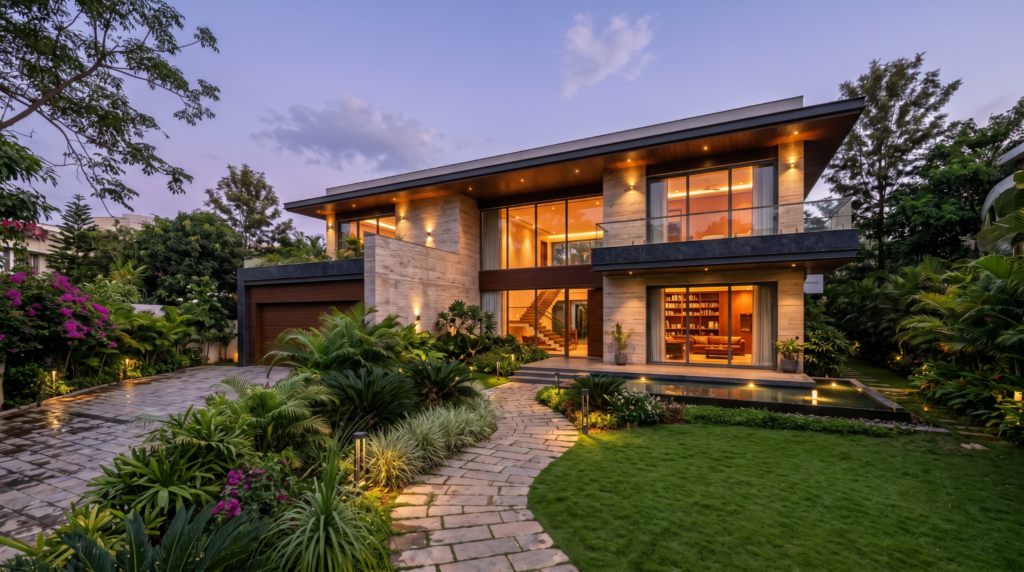
This section often gets left out of guides like this one, and it’s a significant oversight.
Many homeowners in Bangalore are not just designing a fresh interior. They’re handling a renovation in Bangalore, dealing with structural changes, expanding a home, or building from scratch. In those scenarios, the boundary between interior design and construction isn’t just blurry. It doesn’t exist.
A kitchen renovation might require moving a wall. A master bathroom upgrade might need waterproofing and replumbing. A villa construction project needs interior planning to happen alongside the structure, not after. When the design team and the construction company in Bangalore are separate entities, coordination breaks down, and typically at your expense.
This is why choosing a studio that spans both disciplines matters more than most people realize. Urban households are prioritising space optimisation and modular interventions as dual-income families expand, which lifts the adoption of integrated design-and-execution packages.
Line of Thought operates across the full spectrum, as a construction company in Bangalore for new builds, as a villa builder in Bangalore for residential estates, as an interior designer in Bangalore for spaces of all scales, and as a renovation partner for homes that need updating without losing their character. That integration isn’t a marketing line. It’s how the team is structured, and it directly affects project outcomes.
Interior Design Trends Shaping Bangalore Homes in 2026
Understanding what’s current in design helps you have more informed conversations with any studio you’re evaluating. Here’s what’s genuinely influencing projects across the city right now.
Biophilic Interiors
Natural materials, indoor plants, green walls, and abundant natural light aren’t just aesthetic choices anymore. They’re functional ones. Homeowners in Bangalore, a city that sits between a tech hub and a garden city, are increasingly drawn to spaces that bring the outside in. Timber grains, stone surfaces, and textured plasters are replacing high-gloss finishes in premium projects.
Smart Home Integration
Consumers are increasingly demanding seamless integration of automated lighting, climate control, and security systems into their living spaces. What’s changed in 2026 is that smart home features are now part of mid-range projects, not just luxury ones. Voice control, app-based lighting scenes, and automated blinds are standard requests.
Personalised, Story-Led Spaces
The reaction against generic, modular-first interiors is real and growing. Clients want spaces that tell their story: heirloom pieces integrated thoughtfully, artwork chosen with intention, a color palette that reflects personality rather than what’s trending on Pinterest. Boutique studios are thriving precisely because they can deliver this kind of bespoke result.
Multifunctional Rooms
Bangalore apartments, particularly in areas like Whitefield, Sarjapur Road, HSR Layout, and Electronic City, are rarely generous with space. A home office that doubles as a guest room, a dining zone that extends into a study, a children’s room that grows with the child. These are the design challenges studios are solving every day. Modular and space-saving design solutions are gaining popularity in compact urban housing, while luxury and themed decor are rising in premium real estate projects.
Sustainable Material Choices
Sustainability has emerged as a key differentiator, with eco-friendly materials and energy-efficient solutions gaining prominence among environmentally conscious consumers. Reclaimed wood, low-VOC paints, responsibly sourced stone, and energy-efficient lighting are showing up in briefs across all budget segments.
The Bangalore Interior Design Landscape: What Makes This City Different
It’s worth pausing on what makes Bangalore’s design context distinct from other Indian metros.
The city has a dual identity that shapes every project. It’s both the nation’s tech capital and one of its most culturally layered cities. That creates a client base that is globally informed, aesthetically sophisticated, and yet deeply connected to South Indian design traditions. The best studios here understand both. South India, and Bengaluru in particular, is a major technology and commercial interior design hub.
Bangalore’s climate also shapes design decisions in ways that get overlooked. The moderate, relatively cool weather, by Indian metro standards, makes natural ventilation viable, allows for materials that would warp or degrade in Mumbai’s humidity or Delhi’s temperature extremes, and supports indoor plants and biophilic elements year-round. A studio that understands the city’s microclimate designs better homes.
The city’s real estate landscape adds another layer. Areas like Whitefield, Sarjapur, HSR Layout, and Electronic City are seeing high demand for mid-range and premium interiors, driven largely by the IT professional demographic. Villa projects are concentrated around the city’s periphery: Hennur, Devanahalli, Sarjapur, and Kanakapura Road, where larger plots allow for the kind of full-scope design-build work that firms like Line of Thought specialise in.
Why Line of Thought Stands Out Among Interior Design Companies in Bangalore
There are many capable studios in this city. So what actually distinguishes Line of Thought?
The answer isn’t one feature. It’s the combination.
Integrated design-build capability. Line of Thought is simultaneously an interior designer in Bangalore, a construction company in Bangalore, a villa builder in Bangalore, and a renovation specialist. Most studios are one of these things. Being all of them, with a single team and unified accountability, changes how projects are delivered. Structural decisions inform interior decisions in real time. There’s no communication gap between “the designer said” and “the contractor did.”
Two decades of delivered projects. Over 20 years of work across Bangalore means the team has seen virtually every site condition, every client challenge, and every material behaviour across seasons. That institutional knowledge shows up in every project: in the material specifications that hold up, in the construction detailing that prevents future problems, and in the design solutions that come from genuine experience rather than guesswork.
VR and 3D preview technology. Clients see their space in full before execution begins. This isn’t just a visual aid. It’s a decision-making tool that prevents expensive changes mid-project. You see the kitchen layout at eye level before the first cabinet is fabricated. You experience the bedroom lighting before a single fixture is ordered.
WhatsApp-based progress updates. Site transparency isn’t a promise. It’s a process. Clients receive regular photo and video updates directly from the site team, so you know what’s happening at your home whether you’re in the office, traveling, or across the country.
Premium material sourcing. The team sources materials from trusted, vetted suppliers, both local and imported, with full transparency on specifications and pricing. No substitutions without client approval.
Honest conversations about budget. Perhaps most importantly, Line of Thought won’t tell you what you want to hear about budget. They’ll tell you what’s realistic, what trade-offs exist at different price points, and what the right investment is for your specific home and goals.
FAQs: Interior Design Companies in Bangalore
1. How long does a full interior design project take in Bangalore?
For a standard 2 to 3 BHK apartment, expect 8 to 14 weeks from design sign-off to handover, assuming civil work is minimal. Projects with significant civil work, custom furniture, or complex material sourcing typically run 16 to 24 weeks. Villas and large bungalows may take 6 to 12 months depending on scope. Always get a milestone-based timeline in writing, not just a total duration estimate.
2. What is included in a turnkey interior design package in Bangalore?
A true turnkey package covers the entire scope: initial consultation, space planning, concept development, 3D visualisation, material selection, fabrication (modular furniture and joinery), civil work (false ceilings, flooring, wall treatments), electrical and lighting work, plumbing for kitchens and bathrooms, furniture sourcing, decor installation, and final handover. Make sure you verify what’s included in writing, as some studios call a design-only service “turnkey.”
3. What is a reasonable budget for interior design in a 3 BHK apartment in Bangalore?
A standard package for 3 BHK homes ranges from ₹10 to ₹15 lakhs, providing a complete modular kitchen setup, wardrobes for all bedrooms, living room furniture and TV unit, and a basic home office setup. For more premium finishes and higher customisation, budgets of ₹15 to ₹25 lakhs are common. This is before 18% GST.
4. Should I choose a local interior design studio or a large national platform?
Both have merit. National platforms offer standardised processes, wide product ranges, and strong warranties on modular components. Local studios like Line of Thought offer deeper site supervision, more genuine customisation, and the ability to handle civil and construction work that national platforms typically outsource. For complex projects, renovations, or villas, a local integrated studio is usually the stronger choice.
5. How do I avoid hidden costs in an interior design project?
Ask for a fully itemised quote with material specifications. Confirm whether the quote includes GST. Ask specifically about civil work: is it included or quoted separately? Ask about the revision policy and change-order process. Understand the payment schedule and what each payment corresponds to. A renovation premium of 15 to 25% more than new construction is typical due to demolition costs, civil alterations, electrical and plumbing repairs, and disposal fees.
6. What is the difference between an interior designer and an interior decorator in Bangalore?
An interior designer handles the full spatial and structural scope: floor plans, space planning, lighting design, material specification, and coordination with construction. An interior decorator focuses on the surface layer, covering furniture, fabrics, accessories, and styling. For any project involving civil work, structural changes, or full-room transformations, you need a designer, not just a decorator.
7. How do I evaluate a studio’s quality if I’m new to interior design?
Visit their completed projects if possible, not just renders, but actual finished spaces. Call their past clients directly. Ask about how they handled problems during the project, not just what went well. Look at the quality of execution details: cabinet alignment, lighting placement, material transitions. And pay attention to how they listen during the first meeting. A studio that’s genuinely curious about your life will design a better home than one already pitching solutions.
8. What should I look for in an interior design contract?
A solid contract should include: detailed scope of work (room by room, line by line), material specifications, a milestone-based payment schedule, a project timeline with dates, a change-order process, a warranty clause, and dispute resolution terms. Never sign a contract that’s vague on scope or that doesn’t tie payments to specific milestones.
9. Can an interior design company in Bangalore help with villa construction?
Yes, but only certain firms have the capability. Villa construction in Bangalore involves structural design, BBMP approvals, foundation and superstructure work, MEP (mechanical, electrical, plumbing) coordination, and interior design, all of which need to be coordinated seamlessly. Line of Thought functions as a villa builder in Bangalore alongside its interior design practice, which means the architecture, construction, and interiors are planned as one integrated project.
10. How has the interior design market in Bangalore changed in recent years?
India’s interior design market is forecast to reach USD 65.01 billion by 2031, with the residential segment expected to expand at a 16.47% CAGR through 2031 as incomes rise and housing programmes mandate finished interiors. Bangalore has been at the center of this growth, driven by rising tech-sector incomes, a boom in luxury villa construction, and a generation of homeowners who have seen beautiful spaces online and expect them in real life. The market has also matured. Clients are more informed, more demanding, and less willing to accept vague commitments.
Comparing Interior Design Company Types: A Quick Reference
| Criteria | Design-Only Firm | Turnkey Studio | Online Platform | Freelancer |
|---|---|---|---|---|
| Full execution included | No | Yes | Partial | No |
| Civil work capability | Rarely | Yes | No | No |
| Deep customisation | Yes | Yes | Limited | Yes |
| Site supervision | No | Yes | Limited | Yes (single site) |
| Villa/construction work | No | Select firms | No | No |
| Pricing transparency | Varies | High (good studios) | High | Varies |
| Post-handover support | Varies | Yes | Yes | Varies |
| Best for | Clients with contractors | Full home projects | Modular upgrades | Small scopes |
What to Expect During a Renovation in Bangalore: Interior Design Considerations
Renovation projects carry a different set of challenges compared to fresh interiors in a new build. The existing structure introduces variables: hidden plumbing routes, outdated electrical wiring, walls that aren’t where the drawings say they are, and surfaces that look fine until you start digging.
A good interior design company working on a renovation in Bangalore will factor all of this in upfront. That means a proper site assessment before quoting, realistic contingency budgets, and a project manager experienced enough to adapt when the site throws surprises.
The most common renovation mistakes we see:
- Underestimating the scope of civil work needed before any design work can begin
- Not budgeting for demolition and debris disposal, which adds 5 to 10% to total cost
- Choosing finishes without factoring in lead times, as some imported tiles take 6 to 8 weeks to arrive
- Not coordinating the furniture fabrication timeline with the civil work timeline, causing delays at the end
If you’re renovating rather than designing from scratch, make sure the studio you choose has demonstrated renovation experience, specifically in occupied homes or similar site conditions.
Key Takeaways
These are the most actionable insights from everything covered in this guide:
- Define the type of service you need first. Design-only, turnkey, modular platform, or full design-build. Each serves a different need.
- Budget realistically. The average home interior cost in Bangalore ranges from ₹1,500 to ₹3,500 per sq ft. Add 18% GST and a contingency buffer of 10 to 15%.
- The portfolio is your most reliable evaluation tool. Look for completed photos, not just renders. Call references.
- Red flags matter more than green flags. One vague contract or a missing PM is worth more attention than ten beautiful renders.
- Ask the 15 questions before you sign anything. Most people skip this and regret it mid-project.
- Integration between design and construction reduces cost and risk. Firms like Line of Thought that span both disciplines deliver fewer surprises and better outcomes on complex projects.
- Transparency in pricing is non-negotiable. An itemised quote with material specs protects you from scope creep and hidden costs.
- Renovation projects need a different kind of studio. One that can handle what’s behind the walls, not just what goes on them.
- Bangalore’s interior design market is growing fast. Renovation and remodeling are growing at a 13.35% CAGR as retrofits, wellness criteria, and design upgrades drive demand. That means more options, and more reason to be careful about who you choose.
- The right studio treats your brief seriously from day one. If you don’t feel genuinely heard in the first meeting, you won’t feel heard six months in either.
Line of Thought is a premium interior design, construction, villa construction, and renovation company based in Bangalore. If you’re planning a project and want to speak with a team that has delivered high-end spaces for over two decades, start the conversation here.