When planning a modular kitchen, decisions go beyond selecting cabinets, colors, and finishes. The modular kitchen cost depends on several factors, including kitchen size, layout, material quality, hardware, storage accessories, countertops, and installation needs.
In 2026, homeowners have many options, from basic laminate kitchens to high-end designs with acrylic finishes, integrated appliances, smart storage systems, and custom cabinetry.
It is important to understand these options before starting the project so you can create a realistic budget, rather than relying on a showroom quote.
This guide outlines the average cost of a modular kitchen in India, the factors that influence the final price, cost estimates based on the layout, material options, additional expenses, and practical ways to plan a budget.
How Much Does a Modular Kitchen Cost in India in 2026?
There is no fixed price for a modular kitchen as each project has unique requirements. As a general estimate for 2026, a modular kitchen in India can cost between ₹1.5 lakh and ₹7 lakh or more, depending on size, materials, hardware, layout, finishes, and level of customization.
A basic compact kitchen with simple finishes can cost approximately ₹1.5 to ₹2.5 lakh, while a mid-range kitchen typically falls in the range of ₹2.5 to ₹4.5 lakh.
Premium kitchens, which use better-quality materials, branded hardware, specialized storage solutions, and high-end finishes, can cost ₹5 to ₹7 lakh or more.
These figures are general market ranges and not fixed quotations. Prices may vary depending on the city, supplier, brand, specific features, and project requirements.
Indicative Modular Kitchen Cost
| Kitchen Type | Approx. 2026 Budget |
| Compact/Basic Kitchen | ₹1.5–₹2.5 lakh |
| Standard Mid-Range Kitchen | ₹2.5–₹4.5 lakh |
| Premium Kitchen | ₹4.5–₹7 lakh+ |
| Luxury/Highly Customised Kitchen | ₹7 lakh+ |
The most important thing is to check what a quotation includes. One company may quote only the cabinetry, while another may include countertops, hardware, accessories, and installation.
What Determines Modular Kitchen Cost?
Several factors influence the final modular kitchen cost. Two kitchens with similar dimensions can have very different budgets because of their specific designs and requirements.
1. Kitchen Size
The size of a kitchen is a major factor in determining the final cost. Larger kitchens usually need more cabinets, countertops, hardware, and installation work. However, size alone does not always mean a higher cost.
A small kitchen with premium finishes, advanced storage solutions, and high-quality hardware can be more expensive than a larger kitchen with basic features.
This is why it is better to look at the actual cabinet layout and specifications rather than using the floor area to calculate the budget.
2. Kitchen Layout
Kitchen layout affects the amount of cabinetry and countertop required.
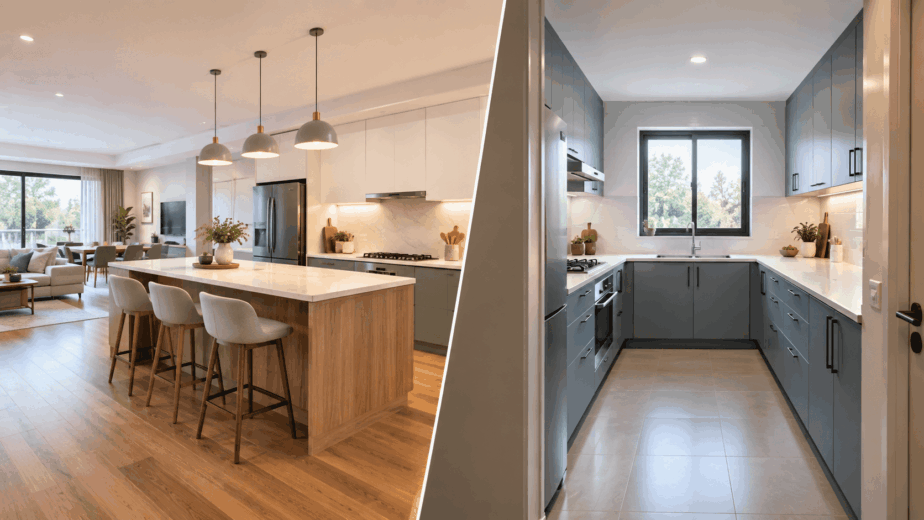
A straight kitchen generally requires fewer cabinets and can be more cost-effective. An L-shaped kitchen offers a good balance between storage and cost. Parallel and U-shaped kitchens need more cabinetry, while island kitchens can increase the cost because they add an extra work surface and may involve additional electrical or plumbing work.
The layout should be chosen based on both functionality and available budget.
Modular Kitchen Cost by Layout
The following figures can be used as broad 2026 planning ranges for standard residential projects.
| Kitchen Layout | Approx. Cost Range |
| Straight | ₹1.5–₹2.8 lakh |
| L-Shaped | ₹2–₹3.5 lakh |
| Parallel | ₹2.2–₹3.8 lakh |
| U-Shaped | ₹2.8–₹5 lakh |
| Peninsula | ₹2.8–₹4.8 lakh |
| Island | ₹3.5–₹7 lakh+ |
These are indicative ranges and can change based on the dimensions and specific requirements of the kitchen.
For example, a compact L-shaped kitchen with laminate finishes and standard hardware may cost towards the lower end of the range.
The same layout with plywood cabinetry, premium hardware, acrylic doors, specialized corner units, and a quartz countertop can be expensive.
3. Cabinet Material
The cabinet carcass material is an important part of the overall budget.
Plywood
Plywood is a popular choice for homeowners seeking strength and durability. High-quality moisture-resistant plywood is suitable for kitchen cabinets, especially in areas with frequent moisture exposure.
- Durability: It can handle regular use and the weight of heavy cookware when good-quality plywood is selected.
- Long-term value: Although it can have a higher initial cost than some alternatives, its durability can make it a practical choice for long-term kitchen use.
HDHMR
HDHMR is another common board used in modular cabinetry. It has a dense construction and smooth surface, making it suitable for selected kitchen applications when the appropriate grade is used.
- Smooth finish: Its uniform surface works well with different types of laminates and decorative finishes.
- Moisture resistance: Good-quality HDHMR can offer better resistance to moisture than standard MDF, making it suitable for selected kitchen areas.
MDF
MDF has a smooth surface and is often used in decorative applications and for doors. Its suitability depends on the quality and where it is used.
- Design flexibility: Its smooth surface makes it suitable for painted and other decorative finishes.
- Budget-friendly: It can be a practical option for homeowners looking for a smooth finish without choosing higher-cost materials for every component.
Particle Board
Particle board is generally a more budget-friendly option. However, homeowners should thoroughly examine the board’s quality, moisture resistance, and structural integrity before choosing it for kitchen cabinets.
- Lower initial cost: It can help keep the overall modular kitchen budget under control.
- Best for suitable applications: It may work well in areas with lower moisture exposure when the appropriate quality and edge protection are used.
There is no single material that is automatically the best material for every modular kitchen. The right choice depends on your budget, usage, moisture exposure, expected lifespan, and the quality of manufacturing and installation.
4. Shutter Finish
The finish you choose for your cabinets can greatly influence the overall cost of your modular kitchen.
Laminates are commonly used because they come in a wide range of colors, textures, and patterns, and are still quite practical. Acrylic finishes offer a sleek, glossy look and usually have a high price.
Veneer looks like real wood, while premium painted and special finishes can further increase the total cost.
When selecting a finish, consider maintenance as well as appearance. A practical finish that is easy to clean may be more suitable for a busy kitchen than one chosen only for its showroom appearance.
5. Hardware and Storage Accessories
Hardware is often overlooked when estimating the cost of a modular kitchen, but it can impact the final price.
Basic kitchens may use standard hinges and drawer slides, while premium kitchens can include soft-close mechanisms, heavy-duty drawer systems, lift-up features, tandem drawers, corner solutions, and specialized pull-outs.
Common storage accessories include:
- Bottle pull-outs
- Spice racks
- Cutlery organizers
- Tall pantry units
- Corner storage systems
- Magic-corner mechanisms
- Appliance units
- Under-sink organizers
- Waste segregation systems
Not all kitchens need every accessory. Choose storage solutions based on your actual cooking habits and storage needs.
6. Countertop Material
The countertop is another key part of the overall budget. Granite remains a popular option due to its durability and availability.
Quartz is also widely used in modern kitchens because it offers a consistent look and comes in various colors and patterns.
Other materials may be suitable based on your design, usage, and budget. The total counter area also affects the cost.
An island or extended breakfast counter will need more material and can increase the overall investment.
What Does a Modular Kitchen Quotation Usually Include?
When comparing prices, homeowners should carefully check the scope of work. A typical quotation may include cabinetry, shutters, basic hardware, countertops, some selected storage accessories, and installation.
However, several costs may be quoted separately. These can include appliances, electrical modifications, plumbing changes, chimney installation, gas-line work, civil work, wall preparation, painting, false ceiling work, transportation, and other site-specific requirements.
This is why the lowest quotation is not always the most cost-effective. A low initial price may become much higher when additional items are added later.
Always ask for a detailed quotation that clearly mentions the materials, dimensions, finishes, hardware, accessories, installation charges, taxes, and what is excluded.
How to Create a Modular Kitchen Cost Estimate
Instead of asking “how much does a modular kitchen cost?”, break the project into individual parts. This helps you understand where your budget is spent.
Cabinetry: This usually represents one of the biggest parts of the budget and depends on the type of board, shutters, cabinet size, and configuration.
Hardware and Accessories: Hinges, drawer systems, pull-outs, organizers, and special mechanisms can vary greatly in price.
Countertop: Material, thickness, edge profile, and total counter area influence the cost.
Installation: Manufacturing and installation charges may be included in the package or quoted separately.
Electrical and Plumbing: Modifications might be necessary depending on your layout and appliance placement.
Appliances: Refrigerators, ovens, dishwashers, hobs, microwaves, and chimneys should have a separate budget unless they are specifically included in the package.
Get a More Personalised Kitchen Cost Estimate
Every kitchen is different, so a general price range may not give an accurate idea of your actual investment. Your kitchen’s size, layout, materials, storage needs, finishes, and accessories can all affect the total cost.
For a clearer idea of what your project might require, visit our Modular Kitchen Cost Estimation. It can help you understand the major cost components and plan your kitchen budget more confidently before starting the project.
How to Control Your Modular Kitchen Budget
You do not need premium specifications throughout the kitchen to create an attractive, functional space.
Start by identifying where quality matters most. Durable cabinet materials and reliable hardware are worth prioritising because they experience frequent daily use.
You can manage the remaining budget through your choice of finishes and accessories. For example, premium finishes can be selectively used on prominent areas while practical laminates are used elsewhere.
Storage should also be chosen carefully. Adding every available mechanism can increase the cost without necessarily improving functionality.
Most importantly, finalise your layout and measurements before manufacturing begins. Changes after production or installation can lead to additional material, labour, and modification costs.
Latest Modular Kitchen Designs and Their Cost Impact
The latest modular kitchen designs are increasingly focused on clean lines, hidden storage, built-in appliances, warm neutral colors, and multi-functional spaces.
Handleless cabinets create a minimalist look but may require special hardware. Built-in appliances offer a seamless appearance but need careful planning and can increase the overall budget.
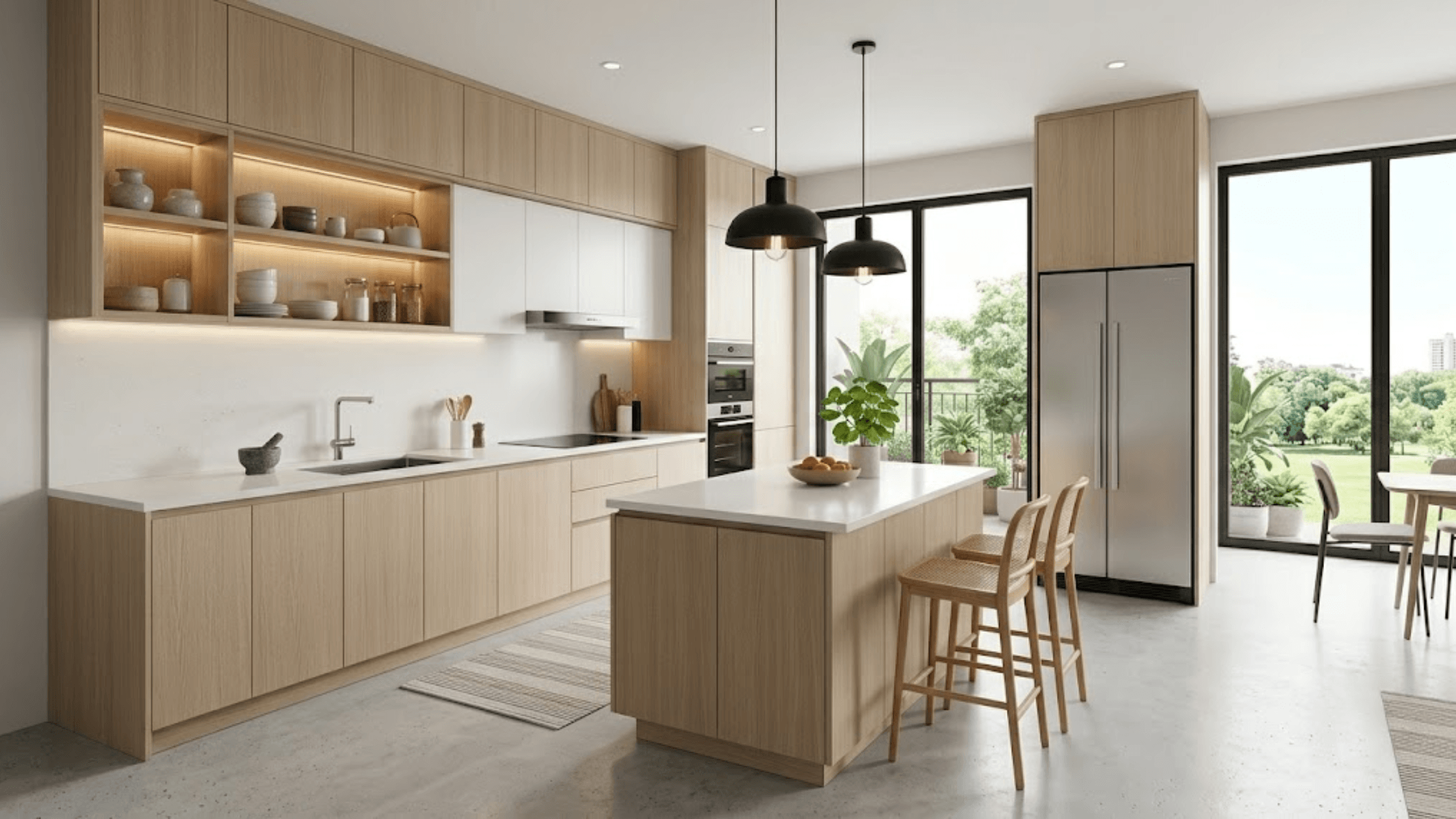
Kitchen islands are also popular in larger homes. They can serve as preparation counters, breakfast areas, storage units, or social spaces. However, an island should only be added when there is enough space available.
Two-tone cabinetry is another popular approach. Using two finishes allows homeowners to add visual interest without making the kitchen too decorative.
The best approach is to use trends selectively. Focus on features that improve functionality and are likely to stay useful for several years.
Modular Kitchen Cost in Bangalore
Bangalore can have noticeable price differences depending on the location, supplier, contractor, materials, and level of customisation.
For apartment homeowners, a standard modular kitchen may fall within the broad mid-range budget, while larger villas and premium residences can require a significantly higher investment.
If you are planning a modular kitchen in Bangalore, site conditions should be considered. Apartment restrictions, lift access, working hours, existing plumbing, electrical points, and installation logistics can affect the final project cost.
Rather than relying solely on an online price, get a detailed on-site quotation. It should clearly list the materials, dimensions, hardware, finishes, accessories, installation, and exclusions.
Common Mistakes That Increase Kitchen Costs
Poor planning can turn a controlled budget into an expensive project. One common mistake is choosing materials without understanding their specifications or long-term maintenance needs.
Changing the layout after manufacturing can also lead to increased costs. Similarly, homeowners may underestimate appliance sizes and later realize that cabinets or countertops need adjustment.
Adding too many accessories is another common issue. Not every pull-out or special mechanism is necessary for every home.
Homeowners may also forget to account for electrical work, plumbing, ventilation, installation, or other site-related modifications when setting their initial budget.
A clear design, accurate measurements, detailed quotation, and early appliance selection can help avoid many unexpected costs.
Final Thoughts
A well-planned modular kitchen does not have to be the most expensive option. The goal is to balance layout, materials, storage, hardware, aesthetics, and functionality according to your needs and budget. Before making a decision, compare detailed quotations, understand what each price includes, and set aside some budget for unexpected requirements.
Whether you are exploring the latest modular kitchen designs, comparing kitchen prices, or preparing a cost estimate, proper planning can help you get better value from your investment.
At Line of Thought, thoughtful planning and practical design can help transform your kitchen needs into a space that looks beautiful and works efficiently every day. Get in touch with Line of Thought to plan a kitchen that fits your space, lifestyle, and budget.
Frequently Asked Questions
1. How much should I budget for a modular kitchen?
In 2026, you can broadly budget ₹1.5 lakh to ₹7 lakh or more for a modular kitchen in India. A basic kitchen may cost around ₹1.5–₹2.5 lakh, while mid-range kitchens can cost ₹2.5–₹4.5 lakh. Premium designs with better materials, hardware, finishes, and storage solutions may cost ₹4.5–₹7 lakh or more. The final cost depends on your kitchen size, layout, materials, and customisation.
2. What is the cost of a 10×10 modular kitchen?
A 10×10 kitchen may broadly cost ₹2 lakh to ₹4.5 lakh depending on the layout, materials, finishes, hardware, and storage accessories. A basic laminate kitchen may fall toward the lower end, while a premium kitchen with plywood, acrylic finishes, quartz countertops, and advanced storage can cost more.
3. What is the price of an 8×12 modular kitchen?
An 8×12 kitchen may cost approximately ₹2.5 lakh to ₹5 lakh in 2026. The actual modular kitchen price depends on how much cabinetry is used, the selected kitchen layout, countertop material, hardware, and level of customisation.
4. How do I calculate modular kitchen price?
Start by considering the kitchen dimensions and layout, then calculate the cost of cabinetry, shutters, hardware, storage accessories, countertop, and installation. Also account for electrical or plumbing modifications and appliances if they are part of the project. For a quick estimate based on your requirements, you can also use the Modular Kitchen Cost Calculator. A detailed cost estimate can then help you plan your budget more accurately than relying only on a per-square-foot rate.
5. How can I save money on a modular kitchen?
Choose a practical kitchen layout, prioritise durable materials and hardware, and avoid unnecessary storage accessories. You can also control costs by selecting cost-effective finishes such as laminates instead of using premium finishes throughout the kitchen. Planning the design, measurements, appliances, and electrical points can also help prevent expensive changes during installation.