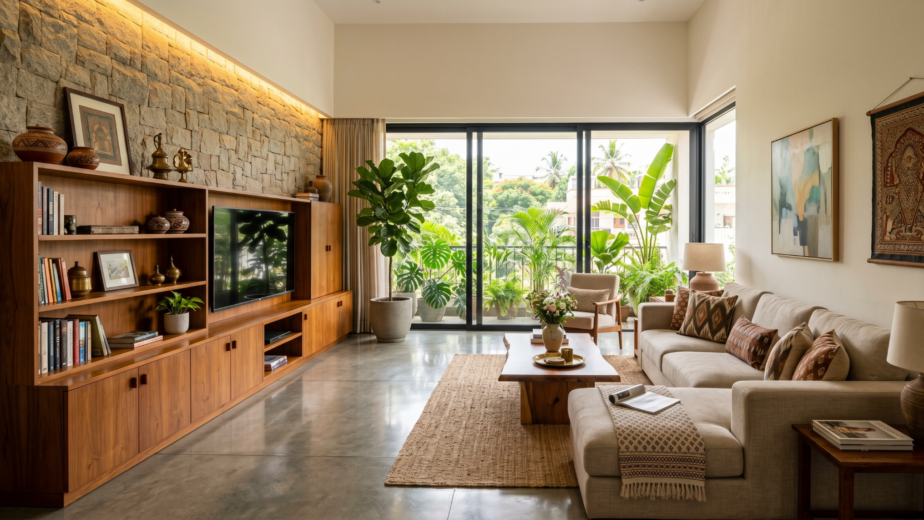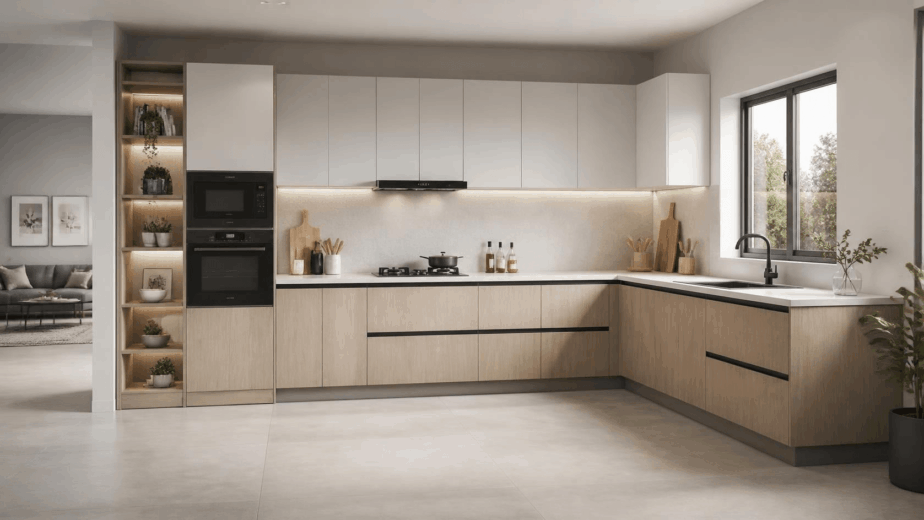

The best home interior designers in Bangalore combine lifestyle-centred space planning with material expertise and on-site execution to transform apartments and villas into homes that genuinely work for the people living in them. In 2026, Bangalore’s design landscape is shaped by biophilic accents, smart lighting systems, multi-functional layouts, and a clear shift toward spaces that balance aesthetics with long-term practicality. If you’re planning a full home interior, renovation, or villa fit-out, the right design partner makes the difference between a space that photographs well and one that actually feels like yours.
TL;DR
- Home interior designers in Bangalore handle everything from space planning and material selection to on-site supervision and final styling, making them very different from commercial designers.
- 2026’s biggest design shifts in Bangalore: multi-functional rooms, hidden storage, biophilic elements, statement walls, and layered smart lighting.
- Full home interior costs for a 3BHK in Bangalore typically start around Rs. 5-10 lakhs for standard finishes and go significantly higher for premium or bespoke work.
- Apartment interiors and independent villa interiors require fundamentally different design strategies, especially around structural flexibility, layout freedom, and society compliance.
- Room-by-room planning matters: living rooms, modular kitchens, master bedrooms, bathrooms, home offices, and pooja rooms each have their own set of spatial rules.
- Line of Thought approaches home interior design in Bangalore as a design-build firm, meaning the same team handles design intent and construction execution under one roof.
The Role of a Home Interior Designer vs a Commercial Designer
This distinction matters more than most people think, and it’s one that gets glossed over whenever someone Googles “interior designer in Bangalore” and ends up speaking to a firm that does both corporate fit-outs and homes with equal indifference.
Commercial interior design is largely about efficiency, brand alignment, and compliance. An office has to work for dozens or hundreds of people with varied tasks. A retail space needs to channel footfall in a specific direction. The emotional temperature of a workspace is relevant, but it’s secondary to function.
Home interior design is almost the reverse. The function matters enormously, but so does the feeling. A family’s home needs to carry the weight of daily life: morning chaos, quiet evenings, guests, children growing up, work spilling into personal hours. A home interior designer in Bangalore who truly understands this doesn’t start with mood boards. They start with questions. How do you actually use your kitchen? Do you cook every day or on weekends only? Does your child need a study nook or an entire homework zone? Do you host formally or casually?
Lifestyle-centred planning is what separates a good home designer from a decorator who makes rooms look good in photos. The best residential work in Bangalore right now is built around how families genuinely live, not around what’s trending on Instagram that week.
There’s also the emotional dimension to acknowledge. People invest deeply, financially and personally, in their homes. A commercial project has a brief and a budget committee. A home project has a family making one of the most significant purchases of their lives. A designer who handles that with the same transactional efficiency as an office fit-out will miss the point entirely.
Home Interior Design Trends Shaping Bangalore Residences in 2026
Bangalore’s residential design scene in 2026 is interesting because it’s being pulled in two directions at once. On one side, the city’s tech-savvy homeowner base wants integration, automation, and efficiency. On the other, there’s a genuine hunger for warmth, tactile materials, and spaces that feel human rather than clinical. The trends that are actually landing in Bangalore homes this year sit at that intersection.
Multi-Functional Rooms
The pandemic permanently changed how Bangalore homeowners think about rooms. The guest bedroom that doubles as a home office, the dining area that converts into a study zone, the living room that can screen a film or host a working session, these aren’t compromises anymore. They’re intentional design decisions. Furniture systems with integrated desks, Murphy beds with flanking shelving, and modular sofas that reconfigure based on occasion are all showing up in completed projects across the city.
Hidden Storage
Storage anxiety is real in Bangalore apartments, especially in the 1,000-1,800 sq ft range that makes up the bulk of the city’s residential inventory. The best-designed homes in 2026 are hiding storage in places that feel invisible: under staircases in independent houses, inside bedheads, beneath window seats, inside panel walls that open out. The result is a home that breathes rather than one that always looks one messy day away from chaos.
Statement Walls
The all-white room with feature lighting had its moment. What’s replaced it in Bangalore homes is more considered: a single wall in deep terracotta, a fluted panel treatment in warm walnut, a hand-applied lime plaster finish that catches light differently at different times of day. Statement walls aren’t a trend so much as a correction toward materiality and character.
Smart Lighting Systems
Lighting is the most transformative and most underinvested element in most Indian homes. In 2026, more Bangalore homeowners are investing in layered lighting systems: ambient, task, and accent circuits on separate controls, warm vs. cool temperature switching for different times of day, and app or voice-integrated dimming. It’s not about technology for its own sake. It’s about how dramatically the right light changes a room’s emotional temperature at different hours.
Biophilic Accents
Bangalore’s climate makes biophilic design genuinely achievable rather than aspirational. Large indoor plants, vertical garden installations, natural stone surfaces, jute and linen textiles, timber with visible grain, these elements connect a home visually to the natural world and they work especially well given the city’s pleasant year-round weather. The research on biophilic design and occupant well-being is strong enough that serious designers are treating it as a functional requirement, not just a visual preference.
Room-by-Room Interior Design Guide for Bangalore Homes
Before diving into specific rooms, a framing thought: the rooms in a home don’t function in isolation. How your living room flows into your dining area affects both. How your master bedroom connects to its bathroom shapes how mornings feel. Good home interior design in Bangalore considers these adjacencies and transitions, not just individual rooms in isolation.
Living Room Interior Design: Making the Most of Your Space
The living room in most Bangalore apartments has to do a lot. It’s the entry experience, the social hub, the TV room, sometimes the informal workspace, and the space guests judge first. That’s a heavy brief for a 250-350 sq ft room.
Layout principles: Start with the sofa placement, not the TV. The TV’s location follows the room’s natural focal point, which is often determined by the primary window or the wall that gets seen first on entry. Floating furniture off walls generally makes rooms feel larger and more deliberate. Avoid pushing every piece to the perimeter.
Material choices: Bangalore’s heat means certain materials age badly. Solid wood outperforms veneers and MDF in humid conditions. For sofas, performance fabrics that resist moisture and staining are worth the premium. Stone or engineered marble for coffee tables gives longevity that glass simply can’t match in a home with children.
Lighting: Every living room needs at least three circuits: a base ambient layer (ceiling), a reading or task layer (floor lamps, wall sconces), and an accent layer for display shelves or art. Single-source overhead lighting is the fastest way to make a nice room feel like a waiting room.Focal points: The most successful living rooms have one clear visual anchor, whether that’s a feature wall, a fireplace-style unit, a significant artwork, or a bookshelf installation. Trying to create multiple focal points just creates visual noise.
Modular Kitchen Design: Balancing Function and Aesthetics

The kitchen is where most Indian homeowners spend significant money and where the wrong decisions cost the most to fix. Modular kitchen design in Bangalore has matured significantly, but there’s still a gap between what looks great in a showroom and what actually works for an Indian family that cooks daily.
Layout choice: The L-shaped kitchen is the most versatile for apartments in the 150-200 sq ft kitchen range. It handles the work triangle between the cooking zone, sink, and refrigerator efficiently and leaves floor space for movement. U-shaped kitchens work beautifully when you have the square footage but can feel claustrophobic in tighter spaces. Parallel or galley kitchens are often the only option in older Bangalore apartments and work well when properly designed with adequate aisle width (minimum 900mm between counters).
Material decisions: For shutters, acrylic, membrane, and lacquered finishes are popular in Bangalore, but they each have trade-offs. Acrylic scratches. Membrane edges can peel in high-moisture conditions if the quality isn’t good. Laminate in quality brands with ABS edge-banding is more forgiving for daily Indian kitchen use. For countertops, quartz over granite is now the preferred choice among designers who’ve seen both age in Bangalore kitchens: quartz is non-porous, doesn’t need sealing, and holds up better to heavy cooking.
Storage logic: The biggest mistake in modular kitchen design is treating every cabinet as equivalent storage space. Tall units near the refrigerator for dry goods, pull-out drawers rather than shelves for base units (access is dramatically better), dedicated zones for daily-use items vs. occasional-use items, these are the storage decisions that determine whether a kitchen actually functions well three years in.
Master Bedroom Interior Design: Luxury Meets Practicality

The master bedroom in Bangalore homes has quietly become the room where design investment is most justified. It’s the space you return to at the end of the day, and it’s where the quality of materials and lighting is felt most personally.
Wardrobe planning: In a standard 12×12 or 12×14 master bedroom, the wardrobe is often the dominant element. Sliding wardrobes preserve floor space but limit simultaneous access. Hinged wardrobes require more clearance but give full-width access. Walk-in wardrobes are increasingly appearing in villas and larger apartment configurations, and when designed well, they function as dressing rooms that genuinely change the morning routine.
Lighting layers: The master bedroom needs the same layered approach as the living room. Overhead lighting for cleaning and practical tasks, bedside reading lights that don’t require getting up to switch off, and some form of soft ambient lighting (backlit panels, cove lighting, or a dimmed wall sconce) for evenings. The ability to shift from task light to mood light in the same room is a comfort upgrade that costs relatively little to install if planned during fit-out.
Texture play: This is where Bangalore’s climate works in a designer’s favor. The relatively mild weather means heavy textiles and layered bedding feel comfortable for more months than in most Indian cities. Linen headboards, velvet cushions, woven throws, textured plaster walls, these tactile elements make a master bedroom feel considered rather than just furnished.Storage beyond the wardrobe: Under-bed storage with hydraulic lift mechanisms is standard now in most quality bedroom furniture. Bedside tables with drawers rather than open shelves, and a dedicated dresser or vanity if space allows, complete a bedroom that stores life without showing it.
Interior Design for Independent Houses vs. Gated Apartment Communities
This is a genuinely important distinction that most blog posts on interior design in Bangalore skip past, so let’s spend real time on it.
The structural reality of apartments: When you’re designing an apartment in a gated community, you’re working within a concrete frame that you cannot alter. You can’t knock down structural walls. You can’t move plumbing stacks without significant cost and society approval. You can’t raise ceiling heights or lower slab levels. The design brief in an apartment is essentially: work brilliantly within fixed constraints. This is where furniture layout, false ceiling design, built-in joinery, and surface treatments carry the full creative weight.
Additionally, most Bangalore housing societies have renovation guidelines that specify work hours, material movement restrictions, and the types of civil work permitted. A good interior design team will know these rules before they start, not discover them midway.
The freedom of independent houses: An independent house or villa gives the designer significantly more latitude. You can rethink room functions, alter internal partitions, modify ceiling heights in specific zones, add skylights, extend into a garden or terrace, and run plumbing and electrical exactly where the design needs it. This freedom is also where the risk lives: without strong project management and a design-build approach, the expanded scope creates more opportunities for coordination failures between different contractors.
Budget behavior: Renovation work in independent houses typically costs 15-25% more than equivalent work in new apartments because of demolition, civil alterations, and the uncertainty that comes with older structures. Hidden conditions (water seepage, outdated electrical, structural repairs) surface during execution and need to be factored into contingency planning.Lifestyle planning differences: Apartment dwellers in Bangalore are often optimizing for efficiency: smart storage, multi-use spaces, seamless flow in limited square footage. Villa owners typically want to establish zones: a formal living area separate from a family room, dedicated study spaces, domestic staff accommodation, and outdoor living that transitions naturally to interior spaces. The design brief is fundamentally different in ambition and scope.
What Good Interior Design Costs in Bangalore in 2026
Let’s be direct about this because most design blogs in Bangalore either avoid the cost conversation or give figures so vague they’re useless.
Budget interiors: Rs. 1,200-1,800 per sq ft. This covers basic modular work, standard materials, and limited customization. Functional but not design-forward.
Mid-range interiors: Rs. 1,800-2,800 per sq ft. This is where most quality apartment interior projects in Bangalore sit. Good material quality, more customization, better lighting design, and reliable execution.
Premium interiors: Rs. 2,800-4,500+ per sq ft. Custom joinery, premium stone, imported fixtures, detailed supervision, and a design team that treats the project as a portfolio piece.
For specific configurations: A 3BHK apartment (1,200-1,500 sq ft) full interior typically runs Rs. 18-35 lakhs for mid-range finishes and Rs. 35-70 lakhs for premium work, depending on scope. A villa (2,500-4,000 sq ft) can range from Rs. 60 lakhs to Rs. 1.2 crores or beyond for luxury fit-outs, particularly when structural changes are involved.
One thing worth being upfront about: these numbers shift based on the scope of civil work, the specific materials chosen, and whether you’re doing a fresh fit-out on an empty flat or a renovation that involves removing and replacing existing work. Renovation is almost always more expensive per square foot than fresh construction because of demolition and the civil surprises that come with it.
The Pooja Room: Sacred Space, Considered Design

The pooja room is the one space in a home where most Indian families won’t compromise on either quality or character, and yet it’s often the room most under-designed by generalist interior firms.
In Bangalore homes, the pooja room ranges from a dedicated room in a villa to a compact pooja unit within a living room or corridor. The design principles that make it work are consistent across formats.
Orientation matters: Most Hindu vastu guidelines prefer the north-east zone for a pooja room. In apartments where this isn’t always achievable, the design should at minimum create a sense of separation and sanctity from the rest of the home.
Material choices: Teak wood, marble, and natural stone are the materials that feel appropriate and age well. Avoid laminates and acrylics in the pooja unit: they’re practical for kitchens but feel out of place in a devotional space.
Lighting: Warm, low-level lighting that mimics lamp-light rather than overhead fluorescent. Concealed LED strips in a warm 2700K tone behind the idol shelf, combined with a provision for a diya or oil lamp, create the right atmosphere.Storage within the unit: Dedicated spaces for diyas, incense, flowers, and puja items that close cleanly when the doors are shut. A well-designed pooja unit looks considered from across the room even when not in use.
The Home Office Interior: A Room Bangalore Finally Takes Seriously
Bangalore’s workforce arguably normalized work-from-home faster than any other Indian city. And yet most homes in the city weren’t designed with a dedicated workspace. In 2026, the home office is no longer a corner with a chair pushed against a wall.
Dedicated vs. integrated: If you have a spare room, convert it properly. Sound attenuation matters in apartment buildings, so acoustic panels or heavy curtains on windows reduce ambient noise significantly. A proper door that closes, not a curtained alcove, makes a real difference to work-life psychological separation.
Ergonomics as a design requirement: The desk height, monitor position, chair quality, and lighting direction all affect physical health over months of daily use. A good interior designer who works on home offices in Bangalore will specify these as non-negotiable elements, not afterthoughts.The visual environment: What you see behind you on video calls and what you see while working both matter. A considered wall treatment, a well-placed shelf with books or objects, and controlled natural light without glare make the home office feel professional without feeling sterile.
How Line of Thought Approaches Home Interior Design in Bangalore
Line of Thought operates as a design-build firm, which means the design team and the construction team work as one rather than the far more common situation where a designer hands off drawings to a contractor who then reinterprets everything through their own lens.
This matters because the gap between design intent and construction reality is where most home interior projects in Bangalore lose quality. A designer specifies a particular edge profile for joinery and the site team does something different because the material wasn’t available or nobody checked. A lighting plan gets value-engineered on site. A special wall finish gets substituted without the client knowing until the home is finished.
Client discovery process: Every project at Line of Thought begins with a structured discovery phase where the team understands how the family actually lives. Not just their aesthetic preferences, but their daily routines, the things that frustrate them about their current space, how they entertain, how the children use the home, what they want to feel when they walk through the door.
Material selection: As a leading interior designer in Bangalore, Line of Thought maintains a curated material library where clients can touch, compare, and make informed choices. Seeing a marble sample in isolation looks very different from seeing it against the joinery finish it will sit next to.
3D visualization and VR: Before a single piece of furniture is ordered or a wall is painted, clients experience the space in three dimensions. This isn’t just about showing clients something impressive, it’s a practical quality control measure that catches issues that would cost significant money to fix in execution.
Site supervision: As both a construction company in Bangalore and a design firm, Line of Thought’s site supervision isn’t delegated to a general contractor who may or may not understand the design intent. The design team is involved through execution, which is how design intent survives contact with reality.
Final styling: The last stage before handover involves the placement of furniture, art, plants, and objects. This is where a space transforms from a completed construction project into a home that feels considered and lived-in from day one.
Line of Thought also works as a villa builder in Bangalore, handling villa construction from ground-up, and offers comprehensive renovation in Bangalore for homeowners who want to transform an existing property without starting from scratch. The advantage of working with one firm across all of these disciplines is that the design language stays consistent from the structure to the last cushion.
How to Choose the Right Interior Designer in Bangalore: A Practical Guide
This section doesn’t appear in most blog posts on this topic, and it probably should, because choosing the wrong design partner is expensive and disruptive.
Check the portfolio for similar scope: A firm that primarily does commercial fit-outs may not have the residential sensitivity your home needs. Look for completed projects that match your budget range and apartment or villa type, not just their most impressive showcase work.
Ask about coordination between design and execution: The most common failure point in Bangalore interior projects is the gap between what’s designed and what gets built. Ask directly: who supervises site execution? Is it the designer or a separate contractor? What’s the escalation process if something is built wrong?
Understand what’s included in the price: Some firms quote only joinery and woodwork. Others include civil work, false ceilings, painting, lighting, and loose furniture. Get a scope breakdown before comparing quotes, because comparing numbers without knowing what’s included tells you nothing.
Check warranty terms: For modular components like kitchen cabinetry and wardrobes, warranty coverage matters. A five-year warranty from a firm that will still be operating in five years is very different from a warranty from a one-person studio.
Understand the timeline and what protects it: Full home interiors in Bangalore typically run 60-90 days for apartments and 90-180 days for villas depending on scope. Ask for the project schedule in writing and understand what provisions exist if timelines slip.
Sustainable Interior Design: What It Actually Means for Bangalore Homes
Sustainability has become one of those words that gets used so frequently in design conversations that it risks losing meaning. Here’s what it practically looks like in Bangalore residential interiors in 2026.
Material choices: Low-VOC paints reduce indoor air quality issues in sealed, air-conditioned apartments. Certified wood products from responsible sources are increasingly available through Bangalore’s material suppliers. Recycled glass and reclaimed wood are showing up in more premium projects.
Energy efficiency: LED lighting throughout is now standard. But the bigger gains come from passive design decisions: windows that allow cross-ventilation, materials with good thermal mass that reduce the load on air conditioning, and skylights or light tubes in independent houses that reduce daytime artificial lighting needs.
Longevity as sustainability: The most sustainable design decision you can make is to invest in materials that won’t need replacing in three years. Cheap laminates that peel, low-quality hardware that fails, and trendy finishes that date quickly are all sustainability failures in the long run, even if they’re marketed as affordable.
Local sourcing: Using Bangalore-region stone, locally manufactured joinery, and Indian textile brands reduces transport carbon and supports regional craft industries. This is something Line of Thought consciously integrates into material specifications.
FAQs: Home Interior Designers in Bangalore
1. What does a full home interior project cost for a 3BHK apartment in Bangalore?
A 3BHK apartment full interior in Bangalore typically starts around Rs. 18-25 lakhs for mid-range finishes and can go up to Rs. 50-70 lakhs or more for premium custom work. The final figure depends heavily on the scope of civil work, the materials chosen, the extent of built-in joinery, and whether the project includes loose furniture and styling. Getting a detailed scope breakdown before signing any agreement is critical.
2. How long does a typical home interior project take in Bangalore?
For a 2 or 3BHK apartment with standard scope, expect 45-75 days from design approval to handover. For a larger apartment or villa, 90-120 days is more realistic. Projects that involve significant civil alterations, like removing walls or major bathroom remodels, add time. Delays typically come from material procurement, slow client approvals, or site access restrictions in apartment communities.
3. What’s included in a full home interior project?
Scope varies between firms, so this is one of the most important questions to ask upfront. A comprehensive full home interior typically includes false ceilings, electrical and lighting, painting, all built-in joinery (kitchen, wardrobes, TV unit, storage), bathroom fitting, tile and flooring selection, and final styling. Some firms include loose furniture; many do not. Always get a room-by-room scope document before comparing quotes.
4. Should I choose a design-build firm or a standalone designer?
A design-build firm handles both design and construction execution under one accountability structure. This reduces the coordination gap between design intent and site execution, which is where most projects in Bangalore lose quality. A standalone designer is excellent for design creativity but requires you to separately manage construction execution. For complex projects, design-build typically delivers better outcomes.
5. How do I ensure the interior design works for Indian cooking?
Indian cooking is intense: high heat, oil splatter, strong spices, and daily use. Kitchen design should account for this with quartz or solid surface countertops rather than marble (which stains), acrylic or lacquer shutters with ABS edge-banding rather than paper foil laminates, a dedicated chimney positioned correctly above the cooking zone, and smooth-surface flooring tiles with minimal grout joints that are easy to clean.
6. What’s the difference between designing a villa vs. an apartment?
Villas offer structural flexibility: you can alter internal partitions, modify ceiling heights, add skylights, and design outdoor-indoor transitions. Apartments work within a fixed concrete frame with limited alteration scope. Villa projects also typically involve coordination with civil and structural work that apartment projects don’t require. Budgets, timelines, and the design brief are all substantially different between the two.
7. Can I stay in my home during interior work?
For full home interiors, staying in the home during the active work phase is genuinely difficult: dust, fumes, noise, and restricted access to kitchens and bathrooms make it impractical. For partial renovations (a single bathroom, one room), managed occupation is possible. Most Bangalore interior designers recommend vacating for full home projects and factoring in temporary accommodation costs.
8. How do I select the right flooring for a Bangalore home?
Bangalore’s climate is relatively stable, which means most flooring options work. Vitrified tiles are the most practical choice for main living areas: easy to clean, durable, and widely available. Hardwood or engineered wood flooring works well in bedrooms. For wet areas, smaller format tiles with more grout joints provide better grip. Avoid large-format marble in high-footfall areas unless you’re prepared for regular maintenance and sealing.
9. What questions should I ask before hiring an interior designer in Bangalore?
Ask: Who supervises site execution, the designer or a subcontracted team? What’s your process when something is built incorrectly? Can you provide references from similar-scale projects? What exactly is included in your quoted price? What’s the payment structure and what are the delay clauses? What warranty do you provide on joinery? These questions separate firms with solid processes from those who are good at selling and inconsistent at delivering.
10. How does Line of Thought handle post-handover issues?
Line of Thought operates as a design-build firm, which means post-handover accountability rests with the same team that designed and built the space. This differs from the common model where the designer and contractor point at each other when something goes wrong after handover. Clients of Line of Thought get a documented snagging process before handover and structured warranty terms for joinery and construction elements.
Key Takeaways
- Home interior design in Bangalore is lifestyle planning first, aesthetics second. The best spaces are built around how families actually live, not around generic design formulas.
- Budget realistically. A 3BHK full interior starts at Rs. 18-25 lakhs for quality mid-range work. Quotes that seem significantly lower usually mean a narrower scope or lower material quality.
- Room-by-room planning matters. Each room in a Bangalore home has its own brief. The kitchen needs to handle Indian cooking realities. The master bedroom needs lighting layers. The living room needs a single clear focal point.
- Design-build wins on execution quality. The most common failure in Bangalore interior projects is the gap between what’s designed and what gets built. Firms that handle both design and construction eliminate this gap.
- Apartments and villas need different design strategies. Apartments optimize within fixed constraints. Villas build from greater structural freedom but require more coordination.
- Smart lighting and biophilic elements are the highest-ROI upgrades for Bangalore homes in 2026. Neither requires a large budget increment but both dramatically change how a home feels to live in.
- Sustainability in interiors is about material longevity and indoor air quality, not just eco-messaging. Low-VOC paints, certified timber, and quality hardware that lasts are practical sustainability decisions.
- The pooja room and home office deserve real design attention in Bangalore homes, not afterthought budgets. Both rooms are used daily and both carry significant functional and emotional weight.
- The three most important questions before hiring any interior designer in Bangalore: who supervises site work, what’s included in your quote, and what warranty do you provide?
Line of Thought combines design, construction, villa building, and renovation capabilities under one firm, which means a single point of accountability from the first conversation to the last wall plug.